Showing posts with label Truth Keeper. Show all posts

Wednesday, March 19, 2025

Daring to Stand for Truth


A. W. Tozer

The nearer we draw to God's heart, the less taste we will have for controversy. The peace we know in God's bosom is so sweet that it is natural that we want to keep it unbroken to enjoy as fully and as long as possible. The Spirit-filled Christian is never a good fighter. He is at too many disadvantages. The enemy is always better at invective than he will allow himself to be. The devil has all the picturesque epithets, and his followers have no conscience about using them. The Christian is always more at home, blessing than he is opposing. He is, moreover, much thinner-skinned than his adversaries. He shrinks from an angry countenance and draws back from bitter words. They are symbols of a world he has long ago forsaken for the quiet of the kingdom of God where love and good will prevail. All this is in his favor, for it marks him out as a man in whom there is no hate and who earnestly desires to live at peace with all men. In spite of his sincere longing for peace, however, there will be times when he dare not allow himself to enjoy it. There are times when it is a sin to be at peace. There are circumstances when there is nothing to do but to stand up and vigorously oppose. To wink at iniquity for the sake of peace is not a proof of superior spirituality; it is rather a sign of a reprehensible timidity which dare not oppose sin for fear of the consequences. For it will cost us heavily to stand for the right when the wrong is in the majority, which is 100 percent of the time.

Friday, March 25, 2022

Who are the experts when it comes to the Scriptures? Should we not test them? By Dave Hunt


Question: You have attacked the teachings of Calvin and Augustine. We’ll see which lasts the longest and stands the test of time—the writings of Augustine and Calvin and their contribution to orthodox theology or those of the writers and staff of TBC. Sorry, but history shows that in the world of art, music, literature, and theology God has given some to be head and shoulders above the rest of us. If I was sick I would seek the best, most brilliant surgeons possible. When studying Scripture I will continue to trust and rely on the great theologians, flawed as they may be.

Dave's answer: It is good counsel to “seek the best, most brilliant surgeons possible.” However, regarding spiritual matters, the intent to lean upon “the experts” clearly avoids the scriptural admonition to “prove all things; hold fast that which is good” (1 Thessalonians 5:21). Who are the experts when it comes to the Scriptures? Should we not test them? We are all flawed. More important, do Augustine and Calvin consistently and accurately “rightly divide the word of truth” (2 Timothy 2:15)? We have simply pointed out some of their obvious contradictions and errors.

The Lord notes on a number of occasions that “Cursed be the man that trusteth in man, and maketh flesh his arm, and whose heart departeth from the Lord” (Jeremiah 17:5). Are we to place people up on pedestals? Even the Old Testament priests were told to not “go up by steps unto my altar, lest thy nakedness is discovered.” We are living in a time when socially, politically, and most important, spiritually, men are turning from their responsibilities and surrendering their thinking to “the experts.” The failure of this approach is becoming only too obvious.

If people regard us as the “answer men,” then we have failed in the task the Lord has given us. We seek to point individuals back to the Scriptures, following the example of the Bereans (Acts 17:11). What you advocate is contrary to the Lord’s admonition and is detrimental to the health of the Body. Those who accept the pronouncements of “big names” such as Calvin or Augustine without “searching the Scriptures daily” are insubordinate to the commands of the Lord.

When Christ rebuked individuals, it wasn’t because they failed to listen to Gamaliel or other prominent teachers. He went to the heart of the matter. The Scriptures were sufficient for the Lord Jesus Christ when He confronted the two disciples who were on the road to Emmaus (Luke 24:13-27). He told them, “O fools, and slow of heart to believe all that the prophets [not the commentators] have spoken.” And, “...beginning at Moses and all the prophets, he expounded unto them in all the scriptures the things concerning himself” (v. 27).

Again, we have not advocated our “TBC opinion” as the standard, and any accusations to the contrary are unsupported and very selective generalizations. What about Calvin and his abuses in Geneva? What about the anti-Semitism/Replacement Theology generated by the teachings of Augustine? It is more than the fact that these men were flawed. As we acknowledged, we all are. The problem is that what they taught is at times greatly in conflict with what the Scriptures say. The Great Physician is the “best, most brilliant surgeon possible.”

It is He who warned against the traditions of men. Now, let’s be obedient to the commands of Christ and although we may find the comments of “great theologians” helpful at times, like all commentaries, the inspiration ceases when we move from the biblical text to the comments of men. We would greatly encourage a prayerful and scriptural reexamination of the position that you have advocated.

As another writer notes, “The reformers had proclaimed the priesthood of all believers, but the Anabaptists, their contemporaries, were not impressed with what they found in the reformers’ churches. The monopoly of the Catholic priest seemed to have been replaced by the monopoly of the reformed preacher. Experts were still disempowering the congregation and hindering it from becoming mature” (Stuart Williams, “Interactive Preaching,” 3/3/08, The Anabaptist Network).

David Charles Haddon Hunt (September 30, 1926 – April 5, 2013) was an American Christian apologist, speaker, radio commentator and author.


Monday, June 22, 2015

GRACE AND HYPER-GRACE IN A NUTSHELL by Dr Lim Poh Ann


The basics about grace and hyper-grace.


As Christians, we are saved by God’s grace, not by our good works, and stay on in this journey of faith because of His grace.

Like the penitent tax collector, we constantly need God’s grace and mercy (Luke 18:9-14). *

In fact, we need lots of His grace and mercy.

The poet Robert Frost penned that “all you really want in the end is mercy.” I think he was spot on there with this one-liner.

As we look at our own lives, weigh our brownie points against our sin, we will definitely conclude that a fair judgment on God’s part at the end of our lives here on earth would be this—‘guilty’.

For we have all sinned and fall short of God’s standards. If not for God’s mercy, where will we be?

Grace is about getting what we don't deserve; mercy is about not getting what we deserve. 

Yes, there is nothing wrong with a teaching that emphasizes grace provided …

it (grace) leads to transformed lives.

it (grace) is not misused as a licence for sinning.

personal responsibility is being emphasized to the same degree as grace.

Most of us are familiar with the account of the woman caught in the act of adultery (John 8:3-11). The crowd gathered around her and wanted to stone her.

But Jesus said, “He who is without sin among you, let him throw a stone at her first.”

Finally, when the crowd dispersed, Jesus asked her, “Woman, where are those accusers of yours? Has no one condemned you?”

She said, “No one, Lord.”

And Jesus said to her, “Neither do I condemn you; go and sin no more.”

This short account has deep theological implications. The recipient of God’s love and mercy ought to show evidence of change in thought and behavior. In other words, the sinner has to repent.

We tend to emphasize God’s love and mercy towards sinners. The need for sinners to bear fruits that befit repentance—personal responsibility—is often not emphasized to the same degree.


Like all good things, grace can be abused.

Human nature is such that we want to emphasize what God's grace can do for us and downplay what we need to do on our part.

We all love a God whose image fits our expectation of a benevolent being. We prefer preachers who portray God as loving and forgiving, patient with our sins and deficiencies—rather than those who dwell on judgment.    

The respected theologian A. W. Tozer says: "Much of our difficulty as seeking Christians stems from our unwillingness to take God as He is and adjust our lives accordingly. We insist on trying to modify Him and bring Him nearer to our own image.”

As long as our perception of God is coloured by personal preferences, our concept of grace will be distorted.  http://bit.ly/1bJcfJo

Varying emphasis on the role of grace in the lives of believers has caused Christians from different camps to hold divergent views on the issue of grace.

The camp that overemphasizes grace—hyper-grace—states (in blue) that:

The truth is you are saved by grace and you are kept by grace. It’s grace from start to finish! Don’t let anyone frighten you into doing dead works, but rest secure in His finished work. Just as you did nothing to earn salvation, there is nothing you can do to lose it.

God has already forgiven all the future sins of believers and, as such, we should put the ‘sin issue’ behind us and banish ‘sin consciousness’ from our lives. So we no longer need to confess our sins. When God looks at us, all He is going to see is Christ’s blood, not our sins whether it is past, present or future. We merely rest in the "imputed righteousness of Christ".

More: http://www.gotquestions.org/hyper-grace.html

While all believers need God’s grace, some believe that hyper-grace can be dangerous. 

Satan rejoices when believers rest in a false sense of security that all is well, that all their sins have been dealt with once and for all at the point of conversion—that they can therefore afford to banish sin consciousness in their lives. 

This condition reminds me of the frog which finds great delight sitting in a basin of warm water. Finally, when water temperature reaches boiling point, it is too late to jump out of the water.

"Faith is good only when it engages truth; when it is made to rest upon falsehood it can and often does lead to eternal tragedy."  – A. W. Tozer.

The following are some posts that shed light on grace and hyper-grace using references from the whole Bible.

THE FIVE FACES OF GRACE 
Grace is much more than God’s unmerited favour towards sinners. There is grace that sustains, grace that empowers and more …


FIVE MISCONCEPTIONS ABOUT GRACE  


GRACE: CAN WE HAVE TOO MUCH OF A GOOD THING?


WHAT IF A BELIEVER SINS REPEATEDLY? 


ONCE SAVED, FOREVER SAVED?


IS REPENTANCE MERELY CHANGING ONE’S MIND?


ARE OUR FUTURE SINS FORGIVEN AT CONVERSION?


DOES GRACE MAKE THE LAW OBSOLETE?


SHOULD WE GET RID OF SIN CONSCIOUSNESS?


ARE GOOD WORKS UNNECESSARY WHEN WE EMBRACE GOD’S GRACE?http://bit.ly/GXjZKb

NO NEED TO CONFESS SIN?

Thursday, July 10, 2014

'I Would Go to Jail over Jesus' Name,' Says Public Official by JOHN JESSUP/CBN NEWS

Robin Bartlett Frazier
Robin Bartlett Frazier, who made waves by praying in public meetings, says she is willing to accept imprisonment for the sake of Christ. (CBN)

Robin Bartlett Frazier, a two-term elected official in Carroll County, Maryland, isn't shy about her Christian faith.

It's what almost landed the granddaughter of a Methodist minister on the wrong side of the law in March 2014.

"Thinking of what Jesus did for me on the cross, I would not say his name because I might go to jail?" Frazier pondered. "I just couldn't do that."

No Public Prayers to Jesus? 

Frazier made waves when she defied U.S. District Judge William D. Quarles' order that banned the Board of Carroll County Commissioners from opening meetings with prayers to Jesus, which they had done since January 2011 when they were sworn in.

One day after the temporary injunction against sectarian prayers came down, she made the following declaration at a commission hearing, which coincided with her turn to lead in prayer:

"I think that is an infringement on my freedom of speech and freedom of religion, and I think it's a wrong ruling," she announced. "And just as I wouldn't give up my guns or I wouldn't allow my children to be palm-scanned or I wouldn't give up my property rights with 'PlanMaryland,' I'm not going to give up those rights. But out of respect for my colleagues, I'm not sure how strongly they feel about it, I'm willing to go to jail over it. I believe this is a fundamental of America. And if we cease to believe that our rights come from God, we cease to be America. We've been told to be careful, but we're going to be careful all the way to communism if we don't start standing up and saying 'no.' So, I say no to this ruling."

Shortly after the statement, Frazier recited a prayer which she attributed to George Washington, though experts dispute its true author. "I didn't want to be directly defiant to the judge," she told CBN News. "I prayed about how I could draw a line, [but] the more I thought about it, the more it made me angry that we would be told not only that we couldn't pray to who we wanted to but that we couldn't use certain words."

Residents Say Prayers are Divisive 

Frazier, who became a Christian around the age of 14 at a Youth for Christ event in nearby Hampstead, Maryland, says ultimately it was an easy stand to make, even though she and the commission were in the middle of a lawsuit with the possibility of tens of thousands of dollars in fines.

The legal challenge came from a group of residents who said the prayers were divisive.

Frazier insists that was never the intent, telling CBN News that the commissioners researched the law and tried to be respectful of others while remaining true to their own religious convictions.

"The idea of inviting people to pray with us, we said we wouldn't do that. It would just be the board," she explained. "So, we kind of looked at the law and tried to be within it, but still asked for wisdom and guidance as we conducted our business."

Prayer Policy Coercive and Insulting?

However, the plaintiffs argued the prayer policy was coercive and insulting. "I reached a point, as others had, you just get tired of going to the meetings and being in an excluded class of individuals," Neil Ridgely explained in a documentary produced by a local student at McDaniel College in Westminster. Ridgely is one of the named plaintiffs in the lawsuit against the county.

Some residents who support the commissioners describe the challenge as Christian discrimination. But the plaintiffs' attorney, Monica Miller, told CBN News she rejects that notion, noting one of the plaintiffs is a practicing Catholic. 

"This isn't about atheism being pushed down someone's throat," Miller said. This is about being inclusive to everyone, including Christians."

Sign of the Times 

The case is still pending, but Frazier remains hopeful she's on the winning side of the law after the U.S. Supreme Court ruled in favor of sectarian prayers in another case, Greece v. Galloway, in early June.

 Frazier believes her case and others, like the recent Hobby Lobby contraception case, point to a decline in religious liberties. "All of these things are to try and limit religion," she said. "That's what motivates me to stand up for the Lord because we will not be America if we push God out."

 While she has received plenty of support for taking a stand for Judeo-Christian values, she also has faced a lot of backlash. Some have even suggested this was all a political stunt to sway voter support in her favor.

 "That was the furtherest [sic] thing from my mind," she explained. "I even tried hard not to politicize it, which is one of the reasons why I'm having this interview now and not before the election—because I didn't want to even give the impression that I was trying to do that, because this wasn't about that at all."

 For those who know her best, like lawyer and longtime friend Bob Lennon, they say Frazier is as genuine as they come. "She's an amazing person. She doesn't have an ego," Lennon said. "She's just a genuinely good person. And she's exactly what a public servant should be. She's there to serve people."

 But county voters had the final say in June's Maryland primaries. Frazier lost her re-election bid to represent her district to fellow Republican Steve Wantz. She conceded the loss was, at least in part, possibly the result of the battle over prayer backfiring.

I Wouldn't Change a Thing

Unfazed, she told CBN News she wouldn't change a thing and is proud of her political record and the stand she made for her Christian faith. Keeping taxes low, defending property rights and fighting an "overreaching" state government are among her proudest accomplishments. But two others top her list: leading a local newspaper reporter in the prayer of salvation and fighting for the right to reference Jesus in public prayers.

"It was much, much bigger than me, and it made me know that I was in the right place at the right time to be used of God," she said. "And maybe that was the full purpose I was in here this [sic] four years."

Saturday, June 28, 2014

Lawless Christians? by John Macarthur


Everyone sins, and everyone knows it. While it is true that fallen human nature minimizes or redefines sin, everyone knows they don’t meet the standard of perfection. Whether they call them “sins” or “mistakes,” everyone will admit to having lied, lusted, or lashed out in anger at some point in their lives—if not regularly.

That being the case, what is the difference between the sins of believers and unbelievers? When a believer sins, is it the same as when an unbeliever sins?

The Nature of Sin

The two primary biblical definitions of sin are “missing the mark” (hamartia) and “without righteousness” (adikia). At its core, sin is a transgression of God’s law; it is to think and behave as if there were no law. The apostle John emphasizes that lawless characteristic when he writes, “Everyone who practices sin also practices lawlessness; and sin is lawlessness” (1 John 3:4).

John wrote his epistle to help believers test the authenticity of their faith (1 John 5:13). Unlike many today, John does not test saving faith on the basis of a signed card, a walk down the aisle, or even a prayer made in a moment of contrition. In the passage we’re considering in this series, he’s focused on the incompatibility of sin with saving faith, and he’s making three arguments for the holiness of believers.

John’s first argument is that sin is incompatible with the law of God. As we saw in 1 John 3:4, he explicitly equates sin with an attitude of lawlessness and rebellion against God (cf. Romans 8:7; Colossians 1:21).

Diagnosing Unbelievers’ Sin

John’s description of sin allows for no exceptions or double standards. Everyone who habitually practices sin is living in an ongoing condition of lawlessness. That’s not to say that they’re sinning to the full extent of their depravity. The lawlessness John refers to is more of an attitude than an action. It’s not merely transgressing God’s law—it’s living with an indifference to the law, as if there was no law-Giver at all.

We must not underestimate the severity of the unrepentant sin that flows from unbelief. We can’t define sin in bits and pieces as individual acts alone. Of course each individual sin is a serious offense to God, but we also need to be able to recognize and biblically diagnose the profound lawlessness of the unredeemed heart.

Diagnosing Believers’ Sin

If you’re a Christian, you no longer have that dominant attitude of lawlessness. The truly penitent heart resolves to obey God’s law (Psalm 19:7-11), deny fleshly lusts (Romans 13:14), resist the world’s allurements (Titus 2:12), and willingly submits to the sovereign Lordship of Jesus Christ in all things. Those whom God has saved and transformed have traded slavery to sin for slavery to God, as Paul wrote:

Do you not know that when you present yourselves to someone as slaves for obedience, you are slaves of the one whom you obey, either of sin resulting in death, or of obedience resulting in righteousness? But thanks be to God that though you were slaves of sin, you became obedient from the heart to that form of teaching to which you were committed, and having been freed from sin, you became slaves of righteousness. (Romans 6:16-18)

That’s not to say believers never sin—no honest Christian would make that claim. But when we do give in to temptation, we experience godly sorrow, not an attitude that is cavalier and rebellious. The believer’s sin is not the product of a heart bent in defiant lawlessness.

Instead we’re heartbroken over transgressing God’s law. It’s the attitude David displays in Psalm 32 and 51, where he pleads for God’s mercy in the aftermath of grievous sin. We share the frustration with lingering sin that Paul expresses in Romans:

For what I am doing, I do not understand; for I am not practising what I would like to do, but I am doing the very thing I hate. . . . For I know that nothing good dwells in me, that is, in my flesh; for the willing is present in me, but the doing of the good is not. For the good that I want, I do not do, but I practice the very evil that I do not want. But if I am doing the very thing I do not want, I am no longer the one doing it, but sin which dwells in me. (Romans 7:15, 18-20)

That penitent heartbreak comes from our love of God and His law. At salvation, each believer bows his knee to the lordship of Christ. It’s a commitment to obey Him, follow Him, and fulfil His law. The believer’s life is marked by wilful, loving submission to God’s law in the pursuit of holiness. We understand that the law isn't a system of works righteousness, or a legalistic set of outdated rules. It’s an expression of God’s holy character, and we join the refrain of Psalm 119, confessing “O how I love Your law! It is my meditation all the day” (Psalm 119:97).

Therefore, how could authentic believers live in open, unrepentant lawlessness? John says they can’t.

But the lawless nature of sin is only the first of three reasons John gives for his conclusion. Next time we’ll look at how sin is also incompatible with the work of Christ.

(Adapted from The MacArthur New Testament Commentary: 1-3 John.)

Friday, June 27, 2014

Time to Drop the Hyper-Grace Rhetoric by Dr Michael Brown


A hyper-grace pastor recently accused me of believing that “Jesus is not enough.”
How should we respond to accusations like this? And are these catchy little phrases, which attempt to make others look like subpar Christians, really helpful? Do they even tell us anything at all?

This particular pastor was critical of my book Hyper-Grace: Exposing the Dangers of the Modern Grace Message (or, at least, he was critical of how another author presented my book, often in extremely misleading ways). He stated, “In Jesus you’re forgiven, sanctified, made holy and made eternally righteousness, yet, Dr. Brown says Jesus isn’t enough. Now he wouldn’t come right out and say such a thing but ... Dr. Brown still depends on human effort to complete the work Jesus began.”

Really? I say (or believe) that Jesus isn’t enough? I depend on human effort to complete the work Jesus began?

This is news to me, after leaning on Him as my only source of righteousness and life these last 42 years.

What point, then, is this pastor trying to make? Is he saying that I don’t mean it when I sing the words, “Oh, precious is the flow that makes me white as snow; no other fount I know, nothing but the blood of Jesus”?

Is he claiming that when I joyfully shout out the lyrics to “In Christ Alone” that I’m just going through the motions? Does he honestly believe that I’m saying that "Jesus is not enough" when I sing with tears of joy those glorious words: “'Til on that cross as Jesus died, the wrath of God was satisfied, for every sin on Him was laid, here in the death of Christ I live”?

And isn’t it ironic that hyper-grace teachers who claim that I (and others like me) say “Jesus is not enough” believe that the words of Jesus, such as those found in the Sermon on the Mount, do not apply to them today? How, then, can they say that “Jesus is enough” and then ignore most of His words? (As documented in depth in my Hyper-Grace book, these teachers commonly claim that most, or even all, of what Jesus taught before the cross was not intended for believers today.)

So, what exactly does this pastor mean when he claims, “Dr. Brown says that Jesus isn’t enough”?

Is he implying that those of us who reject hyper-grace believe that we have any source of forgiveness outside of Jesus? That we plan to stand before God one day and claim justification by our works? That we have any boast outside of our Savior?

The fact is that Jesus did everything that needed to be done to secure our eternal salvation (as He said on the cross, “It is finished”), and now He calls on us, by His Spirit, to respond to His gracious offer, to follow Him, to grow in Him and to work with Him to fulfill the Great Commission. Through His blood, He makes us holy, and then He calls us to walk that holiness out in this world. The Word is quite clear about this.

But based on the hyper-grace rhetoric, are we saying that “Jesus is not enough” when we call on sinners to put their faith in Him? Isn’t this adding something on our part?

And why should we be baptized? Isn’t this “depend[ing] on human effort to complete the work Jesus began”? And why witness and pray if “Jesus is enough”? And why, for that matter, do we need pastors and teachers if “Jesus is enough”?

Do you see how meaningless these phrases can be when used as rhetorical weapons?

When Peter wrote, “As obedient children, do not be conformed to the passions of your former ignorance, but as he who called you is holy, you also be holy in all your conduct” (1 Pet 1:14-15, ESV), was he saying that Jesus wasn’t enough?

Peter also wrote, “Beloved, I urge you as sojourners and exiles to abstain from the passions of the flesh, which wage war against your soul” (1 Pet. 2:11). Was he telling his readers to “depend on human effort to complete the work Jesus began”?

When Paul wrote to the Corinthians, “Let us cleanse ourselves from every defilement of body and spirit, bringing holiness to completion in the fear of God” (2 Cor. 7:1), was he saying that Jesus wasn’t enough?

Paul also exhorted the Colossians to “put to death therefore what is earthly in you: sexual immorality, impurity, passion, evil desire, and covetousness, which is idolatry” (Col 3:5). Was he telling them to “depend on human effort to complete the work Jesus began”?

One hyper-grace pastor wrote, “We are driven to ‘do, do, do’, forgetting that Christianity is actually ‘done, done, done’.”

Another pastor rightly responded, “The Bible tells us to ‘do, do, do’ because though Christ’s redemptive work on the cross IS ‘done, done, done’ Christians still have a lot left to do (see the Sermon on the Mount, the Great Commission, the Book of ACTS, the book of Titus (whose theme is GOOD WORKS) and the Book of James (whose theme is being DOERS of the Word)!”

Exactly!

Why can’t our friends who claim to have been wonderfully touched and enlightened and helped by the hyper-grace message simply revel in their newfound liberty without bashing and insulting those who differ with them? Why must they demonstrate how “free” they are by insulting the walks of others? How is that a fruit of grace? (For my part, I am not bashing anyone when I use the termhyper-grace, since many of those who embrace that message say, “Yes, grace is hyper!” I use the term to be descriptive of their message.)

One hyper-grace author criticized me for listing a number of Scriptures that required an active response on our part, claiming that I was calling for self-effort, as if responding in obedience to the Word is a bad thing. How does rhetoric like this advance the cause of the gospel?

And so, once again, I appeal to my hyper-grace friends: Let’s openly and prayerfully discuss our differences, seeking God earnestly and giving ourselves to the gospel of grace, without resorting to cheap and unhelpful rhetoric.

Wouldn’t this please the Lord?

Michael Brown is author of Hyper-Grace: Exposing the Dangers of the Modern Grace Message and host of the nationally syndicated talk radio show The Line of Fire on the Salem Radio Network. He is also president of FIRE School of Ministry and director of the Coalition of Conscience. Follow him at AskDrBrown on Facebook or at @drmichaellbrown on Twitter.

Monday, June 16, 2014

SOME GENUINE QUESTIONS FOR MY HYPER-GRACE FRIENDS


SOME GENUINE QUESTIONS FOR MY HYPER-GRACE FRIENDS
In his new book on hyper-grace, Dr. Paul Ellis states that in writing my book differing with hyper-grace, I have given opportunity to him and his colleagues to clarify exactly what they believe, which is very helpful to all of us.

At the same time, he feels (as do others) that those of us who believe that hyper-grace goes beyond biblical grace often do not understand the hyper-grace gospel. Conversely, in reading his critique of my book, I felt that he often misunderstood (or grossly mischaracterized) what I and many others believe, referring to our beliefs (quite inappropriately) as “mixed grace.”

How, then, do we move beyond these misunderstandings? How do we isolate our very real differences, some of which are significant, while finding places of major agreement as well?

One reason I “named names” in my book was to be sure that I was quoting the authors accurately, interacting with what they did teach and not holding them responsible for things they didn’t teach. And as an apologist and debater, I always do my best to present the positions of others fairly.

I also engaged in extensive interaction with many proponents of the hyper-grace message before writing my book, because of which I only emphasized the points that these proponents emphasized too, trying to major on the majors.

In light of all this, it was definitely surprising for me to hear other hyper-grace teachers say, “But that’s not what we teach!”

Could it be that the hyper-grace movement is not that monolithic? Or perhaps it’ss a matter of semantics, and when I say one thing, they understand it differently (and vice versa)?

For example, we can easily demonstrate from the Greek New Testament that the Holy Spirit “convicts” us of as our sins as believers (the Greek word meaning “reprove” and “rebuke”), but when some people hear the word “convict” they take it to mean “condemn,” which the Holy Spirit never does to us, God’s children.

So, we might agree on the substance of an issue but miss each other in the wording, which happens commonly in the midst of dialogue and debate.

In the interest, then, of bringing further clarity to where we agree and we disagree, and with no desire to be contentious, I’m asking some honest questions, eager to hear the replies of those who say, “Yes, grace is hyper!” (Really, I am being as sincere as I can be. These questions are being asked for the reasons stated and not to start a fight.)

1) Does God require anything from you as his child? Is there anything he says that you must do as his child other than receive his grace? If so, are their spiritual benefits that come through obeying these requirements and spiritual losses that come from ignoring them?

2) The New Testament writers often exhort us to live in ways that please the Lord. Does that mean that it is possible for us to displease him? We agree that he relates to us as his beloved children, but is he always pleased with us? And since Paul urges us not to grieve the Spirit, does that mean that we can, in fact, grieve him?

3) Is there anything you can do to disappoint the Lord? If the Lord always sees you as perfect in his sight, as is commonly taught in the hyper-grace gospel, is there any way for you to disappoint him? I’ve heard it said that we can only grieve or disappoint him by not trusting his grace, but according to your message, hasn’t that sin been forgiven as well?

4) If God has pronounced your future sins forgiven in the same way he has pronounced your past sins forgiven, why do Paul and other New Testament writers address these very sins in their letters, and why does Jesus address them in Revelation 2-3? We know that God doesn’t bring our past sins up to us, since he has forgiven and “forgotten” them. Why then does he bring our present sins up to us in the New Testament, even warning us about the dangers of walking in those sins, if they have also been forgiven and forgotten in advance?

5) Is it possible for you to displease the Lord? Is God as pleased with you if you leave your spouse and commit adultery as he is if you spend time in personal communion with him? While his love for you is constant, is his fellowship with you exactly the same when you are obedient as when you are disobedient?

6) A leading hyper-grace teacher claims that the doctrine of progressive sanctification is a “spiritually murderous lie.” Does that mean that grace preachers like Charles Spurgeon, who believed in progressive sanctification, taught this alleged lie? And if “progressive sanctification” simply means to walk out our holiness with the help of the Spirit, what is so dangerous about this teaching? Put another way, why do you reject the concept that the one who made us holy now calls us to live holy lives in thought, word, and deed, thereby “completing our sanctification in the fear of God” (2 Cor 7:1)?

7) We agree that the Holy Spirit never condemns us for our sins as believers, but does he ever make us uncomfortable when we sin? To me, this is a very loving act of the Father, not wanting us to get comfortable doing things that could destroy our lives and the lives of others. Isn’t that something to be embraced? And doesn’t that drive us to the cross rather than away from it?

8) We agree that we do not need to confess every sin we commit each day in order to “stay saved,” but is any type of confession and request for forgiveness appropriate? For example, is it appropriate for believers to say, “Father, I’m sorry for sinning and I ask you to wash me clean”? Is it OK for us to get our feet washed (using the language of John 13) when we feel the need to? Are we denying God’s grace or showing an ignorance of God’s grace when we confess our sins to him, asking him to forgive us?

9) Since you believe we are not to judge our salvation by our conduct, how we can avoid self-deception? I know that you are against certain types of self-examination lest you become “sin conscious” and take your eyes off the finished work of the cross, but what do you make of verses that state that we know we have passed from death to life only if we live a certain way (like 1 John 3:14)? If I understand you correctly, you would question the salvation of someone who demonstrated no change of life and continued to walk in unrepentant sin. But doesn’t this mean that, on some level, you are looking at your “performance” to verify your salvation?

10) What actions does God call us to as believers that you do not describe as “self-effort”? My experience has been that when I quote a verse from the New Testament exhorting us to live a certain way (be it take up our cross or run our race or press toward the mark), hyper-grace adherents accuse me of depending on self-effort or calling for self-effort. Can you clarify that for me?

11) Do you think there’s any danger in claiming that the teachings of Jesus before the cross don’t apply to us as believers today? I take a lot of time on this subject in my book, exposing what I believe to be the very real dangers in doing this, but for the moment, I’m wondering if you could tell me why grace preachers like Spurgeon (whom I mentioned above) or D. M. Lloyd-Jones gloried in the Sermon on the Mount and considered it to be choice material for believers today, whereas you reject it as being applicable to us. Were they missing something?

12) What does it mean to you walk in the fear of the Lord? We agree that we are not to live in servile fear before our Father, especially since fear has to do with punishment. But what do you make of verses like these? “And if you address as Father the One who judges impartially based on each one’s work, you are to conduct yourselves in fear during the time of your temporary residence. For you know that you were redeemed from your empty way of life inherited from the fathers, not with perishable things like silver or gold, but with the precious blood of Christ, like that of a lamb without defect or blemish” (1 Pet 1:17-19).

13) Do you see any possible danger in emphasizing that it is impossible for a believer to lose his or her salvation? Of course, we could debate whether the Bible teaches this at all, but simply as a matter of experience, many of us have encountered very lost people – drunkards, fornicators, without the slightest interest in God (see 1 Corinthians 6:9-10) – who have then assured us that they were saved because it was impossible for them to lose their salvation. So, on a practical level, do you feel it’s important to add any scriptural caveats to your teaching of eternal security and, if so, how can you do this without putting an emphasis on “performance”? Again, in posting these questions, I am not trying to be contentious, nor have I worded them so as to set some kind of trap. I am genuinely asking for honest responses from those who embrace the hyper-grace message for the sake of clarity and understanding.

At the same time, my fervent hope is that hyper-grace leaders and adherents will reconsider their teachings, reading my book for themselves (rather than relying on what they have been told about it), especially if some of their teachings have been reactionary in nature, born out of bad experiences in the past and hence, swinging out of balance in response. And I have been blessed to see that some hyper-grace teachers, like Ryan Rufus, with whom I often express disagreement in my book, have already written books trying to address some problems arising in their movement.

Thanks for taking the time to read this and, as your schedule permits, for responding to some or all of these questions. May we all embrace God’s grace in full! (A quick P.S. I welcome comments from those who reject hyper-grace as well as from those who embrace it, but again the goal is not to argue but to understand.) 

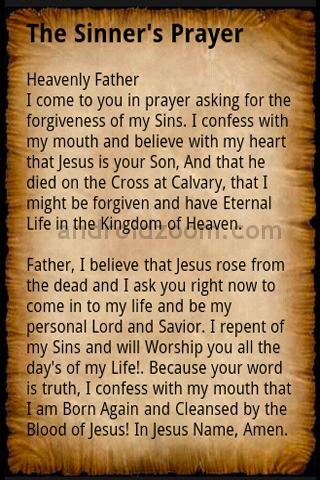
Is the Sinner's Prayer biblical or not? by Tony Miano and Matt Slick


Is the sinner's prayer biblical?  Yes and no.  It is biblical for a sinner to pray to Jesus to forgive him of his sins.  It is not biblical to say someone is saved "because of reciting the Sinner's Prayer".  It is biblical to confess one's sins and ask for forgiveness and put trust, hope, and faith in Christ and his sacrifice on the cross. But, again, it is not biblical to give someone assurance of salvation based on reciting a prayer - on simply saying the words. Salvation is the work of God and the manifestation of that work is sometimes seen in people publicly confessing, even publicly praying to receive Christ as Savior.

So, we want to be clear that elements of the sinners prayer are biblical. However, we also want to be very clear that a person is not saved "because he prayed a prayer". Faith, assurance, and hope should never be placed in the prayer. Instead, faith, assurance, and hope should be placed in Christ via the proper presentation of the saving message which consists of presenting the Law (that we are sinners before God and deserve judgment) and the gospel (that only through faith and trust in what Christ has done on the cross where he bore our sins and died with them can we be saved from God's righteous judgment).  People must repent of their sins and believe the gospel.  That is what the Bible says.

Mark 1:15, "The time is fulfilled, and the kingdom of God is at hand; repent and believe in the gospel.”

1 Corinthians 15:1-4, "Now I make known to you, brethren, the gospel which I preached to you, which also you received, in which also you stand, 2 by which also you are saved, if you hold fast the word which I preached to you, unless you believed in vain. 3 For I delivered to you as of first importance what I also received, that Christ died for our sins according to the Scriptures, 4 and that He was buried, and that He was raised on the third day according to the Scriptures."
Acts 16:30, "and after he brought them out, he said, “Sirs, what must I do to be saved?”  31 And they said, “Believe in the Lord Jesus, and you shall be saved, you and your household."

What we are not saying about the Sinner’s Prayer

Many Christians have a prayer of repentance and faith as part of their conversion testimony. We know there are genuine, Christ-loving, born-again followers of Jesus Christ who will forever testify that someone shared the gospel with them and asked them to repeat a prayer, which they did, and they were saved. This article should in no way be interpreted or construed as an effort to bring into question one’s salvation because he “prayed a prayer.”

That being said, no one is saved because they “prayed a prayer.”  It is not reciting a phrase or the words of a prayer that saves anyone.   We are against formula salvation.  Those whom God sovereignly chooses to save (1 Peter 1:3; 2 Thess. 2:13) and draw to Himself (John 6:44) may pray a prayer - on their own or at someone else’s urging - as part of the first fruits of their salvation.

While there are many Christians who will testify, to the glory of God, that they prayed a “Sinner’s Prayer” the day God saved them.  But there are also people in the world who, as a result of being led in a false “Sinner’s Prayer,” are now apostate, they were false converts (Hebrews 6:4-6; 10:26-31). They have turned their back on Christ and have left the faith they thought they had, because they had never really come to genuine repentance and faith in Christ. They are and were false converts because they put their hope of salvation in "saying words", in "reciting a prayer", in "doing the christian prayer thing", instead of truly trusting Christ to forgive them of their sins against God.

The purpose of this article is not to discourage genuine Christians or cause them to question the authenticity of their faith because their conversion story includes a “Sinner’s Prayer.” Many people have truly been saved along with saying the Sinner's Prayer.  Rather, the purpose of this article is to warn Christians, to plead with Christians to preach the gosple biblically and if/when a person wants to trust in Christ and receive him as Savior, that it is done properly.

A Familiar Story: Sinner’s Prayer Evangelism

"So, do you understand what I've shared with you?"
"Yes."
"Is there any reason why you wouldn't want to receive Jesus as your Lord and Savior, right now?"
"Umm. No. I guess not."
"Great. Then just pray this prayer after me. There's nothing magical about the words. What matters is the condition of your heart."
"Out loud?"
"Yes. Jesus said if you confess me before men I will confess you before my Father."
"Right here? Right now?"
"Well, it's up to you, of course. But what could be more important than making sure you're right with God. After all, tomorrow isn't promised to anyone."
"Okay."
"Great! Just pray this prayer after me. Lord Jesus..."
"Lord Jesus..."
"I know I'm a sinner..."
"I want my sins forgiven..."
"I don't want to spend eternity in Hell..."
"I want to be in Heaven with you..."
"Please forgive me..."
"Come into my life..."
"Save me..."
"Save me..."
"Make me a new creature..."
"Be my Lord and Savior..."
"In Jesus' name, I pray..."
"Amen."
"Amen."
"Praise God! Welcome to the family, brother!"
"Thanks."

"Now, it's real important you start reading your Bible and praying every day. And you've got to start going to church. You need to be around other believers. You need to be discipled. You need to begin the life-long process of growing in your faith. And I'm here to help in any way I can."
"Okay."

Please not that we have underlined those parts of the prayer that are biblical. So, there are biblical elements to the sinners prayer but it is not the sinners prayer itself it saves and again, it must be made clear that it is not reciting the prayer that saves anyone.

It happens thousands of times every day around the world. It happens in one-to-one conversations between friends, relatives, and even strangers. It happens in pastors' offices. It happens via email. It happens in online chat rooms. A well-intentioned Christian shares the gospel with someone (hopefully a gospel that is consistent with the Word of God). The listener seems to understand and even seems emotionally moved by the conversation. The Christian, with eagerness and sincerity, asks the person if he wants to know Jesus as his personal Savior. If the other person responds favorably, then the Christian leads him in a "Sinner's Prayer."

The Sinner's Prayer, False Conversion, and Tradition

This is important.  Many Christians make the cataclysmic and unbiblical mistake of giving the other person a false sense of assurance of salvation, by asserting the person is saved because he prayed a prayer. So, many people walk away from such a conversation still dead in their sins, but believing what they've been told. "I believed what my friend told me, and I prayed a prayer. So, now I'm a Christian!"

It is unbiblical confidence in the "Sinner's Prayer" (instead of repentance and trust in Christ) that often leaves me thinking American Evangelicalism is much closer to Rome than she realizes. The reason is that like the apostate Roman Catholic Church, which holds up church tradition as equal or superior to the Word of God, American Evangelicalism sometimes does the same with her own traditions.

The "Sinner's Prayer" is a case in point.

My presupposition regarding it is an easy one to articulate. Simply put...

There is not a single verse or passage in Scripture, whether in a narrative account or in prescriptive or descriptive texts, regarding the use of a “Sinner’s Prayer” in evangelism. Not one.

However, proponents of the use of the "Sinner's Prayer" will cite several verses/passages of Scripture in a failed attempt to support the unbiblical practice. Here are several:

Matthew 7:7, "Ask, and it shall be given to you; seek, and you shall find; knock, and it shall be opened to you."

Luke 18:10-14, " “Two men went up into the temple to pray, one a Pharisee, and the other a tax-gatherer. 11 “The Pharisee stood and was praying thus to himself, ‘God, I thank Thee that I am not like other people: swindlers, unjust, adulterers, or even like this tax-gatherer. 12 ‘I fast twice a week; I pay tithes of all that I get.’ 13 “But the tax-gatherer, standing some distance away, was even unwilling to lift up his eyes to heaven, but was beating his breast, saying, ‘God, be merciful to me, the sinner!’ 14 “I tell you, this man went down to his house justified rather than the other; for everyone who exalts himself shall be humbled, but he who humbles himself shall be exalted."

Romans 10:9-10, "that if you confess with your mouth Jesus as Lord, and believe in your heart that God raised Him from the dead, you shall be saved; 10 for with the heart man believes, resulting in righteousness, and with the mouth he confesses, resulting in salvation."

1 John 1:9, "If we confess our sins, He is faithful and righteous to forgive us our sins and to cleanse us from all unrighteousness."

Revelation 3:20, "‘Behold, I stand at the door and knock; if anyone hears My voice and opens the door, I will come in to him, and will dine with him, and he with Me."


A brief exposition of each of the above texts will show they should not be used to support the practice of the "Sinner's Prayer."

Continue reading: Does Matthew 7:7 support the Sinner’s Prayer?

Saturday, June 14, 2014

CHRISTIAN LAWSUIT by Dr. Paul Nah


Professor Dr. Paul Nah is a Retired Lecturer. He was an Associate Professor in the University of Malaya. He spends his time doing research and studying on topics that are affecting churches today in Malaysia. This is his view after going through the following 27 Articles written by different individuals.

A REVIEW OF 27 ARTICLES
References:
1. A Manual on Christian Conflict Resolution, Wong K K. 2. Christians and Lawsuits, G. O. Wood, Superintendent, AOG, USA. 3. INAPPROPRIATE LEGAL ACTIONS by D. Goins 4. 1 Cor 6:1-11 by D. Chadwell 5. 1 Cor 6 – No Shield for Lawbreakers, W. JACKSON. 6. Exegetical Paper/1 Corinthians 6 1-8 7. Litigation between Brethren, W. W. Blue 8. 1 Cor 6:1-11, An Exegetical Study 9. 1 Cor 6 “Scriptural Litigation 10. 1 Cor 6:1-11, Dealing With Spiritual Immaturity, G. DeLashmutt. 11. 1 Cor - "Revelation Or Litigation? Pastor D. Legge 12. CHRISTIANS AND LAWSUITS "TWO WRONGS DON'T MAKE A RIGHT" by Matthew Tozer 13. Christians and Lawsuits 14. What is your view of lawsuits between Christians? 15. Christians and Lawsuits 16. W. Nee on Christians Filing Lawsuits 17. Should Christians Sue in Court? M. Fairchild 18. 1 Cor 6:1-11 - Avoiding Lawsuits with Christians 19. How to Resolve Legal Issues Biblically, T. Morgan, 20. When Do You Need to See a Lawyer? Crown Financial Ministries 22. When Can Christians Sue? R. Ross 23. Opinion: should Christians sue? L. Burkett 24. AN EXPOSITION OF 1 CORINTHIANS CHAPTER 6. C. Hodge 25. Adam Clarke Commentary, 1 Corinthians 6:1-11 23. 26. Joseph Beet Commentary: SOME OF THEM GO TO LAW, AND THAT BEFORE UNBELIEVER 27. 1 Corinthians CHAPTER 6:1-11 24. Law and Justice in New Testament Times, J. R. Albrektson.

Ways of resolving Christian disputes:
1. Love & Forgive Matthew 5:44 – 48, 18:21-22
2. Suffer wrong & bear cost. 1Corinthians 6:7, Matthew 5:39 – 42
3. Christian Mediation Matthew 18: 15 – 17
4. The Corinthian Christian Lawsuit. 4. 1Corinthians. 6: 1 – 8
5. Paul’s acceptance of the Roman Govt as established by God 5, Romans 13: 1 – 5
6. Paul appealed to the Roman Legal system to for justice, Acts 16: 37-39, 22:25, 25:11

1. Love & Forgive Matthew 5:44 – 48, 18:21-22
Christians are often badgered by pastors into believing that Christian disputes can only be resolved by loving and forgiving the perpetrator. However the truth is, if Christian love is to be a healthy one it must be balanced by firm discipline. Many remember Jesus as sweet and mild, forgetting that once He used the whip to clear in His Father’s temple of the many thieves and robbers lurking there.

Just L-O-O-O-V-E and FORGIVE even our enemies? (Mat 5:44.)
Why don’t we heed the advice of Dr. James Dobson, a famous Family Life teacher and Personal Advisor on American Family to the President of the USA and author of the widely-read book entitled “Love and Discipline” where he strongly recommended that we should ALWAYS BALANCE LOVE WITH DISCIPLINE in the bringing up of our children.

What does God have to say about this?
“....Because the Lord corrects everyone he loves, and punishes everyone he accepts as a child." (Heb 12:6)
"But if you are WITHOUT CHASTISEMENT… then you are BASTARDS and not sons." (Heb 12:8 MKJV)

Dr Richard D. Dobbins, a Christian Psychologist and Family Life Teacher has this to say – “if you ONLY love your child you will end up with a spoilt person whom nobody likes. If you JUST DISCIPLINE you will get a person who cannot love himself.”

2. HOW MUCH SUFFERING OF WRONG MUST WE BEAR ?
“But I say to you, do not resist him who is evil. If anyone slaps you on the right cheek, LET HIM SLAP YOU LEFT CHEEK ALSO. And if someone takes you to court to sue you for your shirt, LET HIM HAVE YOUR COAT ALSO. And if one of the occupation troops forces you to carry his pack one mile, CARRY IT TWO MILES.” (Mat 5: 39 – 42)

Note that cost demanded in the three situations are ALL quite small – a slap, a coat, a mile (and some pride.) They are affordable or manageable so you can live with it. What if you can’t afford the demands e.g someone defrauds you of RM One million or all of your life’s saving and you are already 70 years old. Are you going to forgive and forget? Can you?? You would be most stupid not to go to court! Furthermore, by bringing that person to court you are protecting another Christian of a possible fraud.

So THE PRINCIPLE IS: if you can AFFORD it, then overlook the matter and move on with your life. If you can’t then don’t feel guilty by 1 Cor 6, if you have to go to court.

Furthermore, in 2 COR 11: 19 & 20 PAUL REBUKED the Corinthians for allowing false teachers to SLAP THEM ON THEIR FACE.


3. CHRISTIAN MEDIATION
“But if your brother shall trespass against you, (first) go and tell him his fault between you and him alone. If he hears you, you have gained your brother. But if he will not hear you, (second) take one or two more with you, so that in the mouth of two or three witnesses every word may be established and if he shall neglect to hear them, (third) tell it to the church. But if he neglects to hear the church, (fourth or lastly) let him be to you as a heathen and a tax-collector.” (Mat 18: 15–17)

Once the church has been consulted and there is no admission of guilt then we are asked to treat the brother as a heathen and a tax-collector. This means we can now take the person to the SECULAR LAW COURT because all avenues have already been exhausted (Wong Kim Kong, Advisor, NECF & George O. Wood, Surperintendent, AOG Council, Misouri. USA)


4. THE "1 COR 6: 1 – 8" LIABILITY.
I describe this as a liability because it often read in such a shallow fashion that impression it gives is that Paul is against Christians going to the secular law court. NOTHING IS FURTHER FROM THE TRUTH. Let’s read through 1 COR 6: 1 – 8.

v1 - If any of you have a dispute with another Christian, how dare you go before heathen judges instead of letting God's people settle the matter?
v2 - Don't you know that God's people will judge the world? Well, then, if you are to judge the world, aren't you capable of judging small matters?
v3 - Do you not know that we shall judge the angels? How much more, then, the things of this life!
v4 - If such matters come up, are you going to take them to be settled by people who have no standing in the church?
v5 - Shame on you! Surely there is at least one wise person in your fellowship who can settle a dispute between fellow Christians.
v6 - Instead, one Christian goes to court against another and lets unbelievers judge the case!
v7 - The very fact that you have legal disputes among yourselves shows that you have failed completely. Would it not be better for you to be wronged? Would it not be better for you to be robbed?
v8 - Instead, you yourselves cheat and do wrong, and you do this to your brothers.

Background of the Corinthian church.
The Corinthians were extremely immature and carnal (1Cor 3:1,2). Disputes resulted in the church being divided into at least four factions (1 Cor 1:12). They indulged in all sorts of sins including sexual sins and cheating one another (1Cor 5:11). From their behaviour you could barely distinguish them from a non-believer!

Now, lets go to verse 1 of 1Cor 6.
It states clearly that the Corinthian Christians were settling their disputes before heathen judges instead of coming before their fellow Christians in the church. The disputes that were generally trivial - in different translations given as a matter, a complain, and in 1Cor 6:2 as insignificant cases (GW, ISV), smallest matters (ASV, KJV, MKJV, GNB), small problems (CEV), small judgments (LITV). The disputes didn’t really require them to go to the secular courts.

But why couldn’t they resolve it within the church? It likely that they were so divided, into at least four factions (1Cor 1:12), that it becomes impossible to find someone who could be a neutral mediator. So by going to the secular judges an even more horrendous predicament resulted - a shameful Christian testimony before the heathen Judges and all the many non-believers who attended the law courts. The very people whom the Corinthian Christians were supposed to reach with the gospel were the very people they were scrambling to get help to resolve their PETTY PROBLEMS. The Corinthian Christians failed miserably in their CHRISTIAN MISSION!
Can you now understand why Paul was so angry that he used words like “how dare you?’ (1Cor 6:1) and “shame on you” (1Cor 6:5), However, Paul’s strong emotional reaction was NOT DIRECTED AT THE CORINTHIANS GOING TO THE LAW COURTS but to the FAILURE OF THE CHRISTIAN MISSION. Furthermore the disputes were SO TRIVIAL!

Wong Kim Kong, Advisor, NECF, in his article “CHRISTIAN CONFLICT RESOLUTION AND LITIGATION” says PAUL in 1Cor 6:1-11 IS NOT CONDEMNING the secular law courts. In another part he states “There may be times when Christians could morally use legal opportunities”.

George O. Wood, Superintendent, Assemblies of God, Springfield, Missouri, USA., in his article “Christians and Lawsuits” said Paul never addressed the theme of whether a lawsuit would be appropriate once the church had declared a party to be a "pagan and a tax collector.“ (Mat 18:15 – 17) Perhaps such would be permitted under the teaching of Rom 13:1–5 that the secular government exists to uphold justice and to prevent lawlessness.


5. IF WE GO TO COURT TODAY WILL IT BE VERY DAMAGING TO OUR CHRISTIAN TESTIMONY?
CHURCH-RELATED DISPUTES and some SELECTIVE CIVIL CASES should be settled through CHURCH MEDIATION by Godly Christian leaders. (If the church cannot settle it, the dispute may have to be referred to the LAW COURTS because there is no other recourse).

ALL OTHER CIVIL CASES and ALL CRIMINAL CASES are REQUIRED BY LAW to be settled in the LAW COURTS. Christians have no choice here even if it brings about a bad testimony.

So in answer to the question, IF WE GO TO COURT TODAY WILL IT BE VERY DAMAGING TO OUR CHRISTIAN TESTIMONY, the answer is IT MAKES NO DIFFERENCE! Christians who have to go to the law courts will have to go to the law courts.

6. GOD’S REPUTATION IS OF LESSER IMPORTANCE TO HIM THAN HIS DESIRE FOR HIS PEOPLE TO LIVE RIGHTEOUSLY.
In 2 Chronicles 36:11 …17 recorded that Zedekiah, King of Judah :
1. Sinned against the LORD
2. Stubbornly refused to repent
3. Caused the people to sin.
So the LORD brought the King of Babylonia to attack the Israelites.

God’s people were totally defeated by the Babylonians. Isn’t that a BAD TESTIMONY FOR GOD?

The Babylonians could then say their gods were greater than the Almighty God of Israel. Isn’t that a BAD TESTIMONY FOR GOD?

BUT WHO BROUGHT THE KING OF BABYLONIA TO ATTACK ISRAEL? GOD HIMSELF !
What is God trying to tell us? – God’s reputation is important to Him
BUT MORE IMPORTANT IS THAT WE LIVE RIGHTEOUSLY BEFORE HIM!

Some Christians express concern that going to the Law Court will be a bad Christian testimony.
HOWEVER, THE TIME TO BE CONCERN ABOUT BAD CHRISTIAN TESTIMONY IS ALREADY PAST.
THE BAD CHRISTIAN TESTIMONY IS ALREADY KNOWN WORLDWIDE.
WHAT THE WORLD IS NOW WAITING FOR IS, TO SEE WHAT WE ARE GOING TO DO ABOUT IT !
IF A CRIMINAL OFFENSE HAS BEEN COMMITTED, DO WE HAVE THE GUMPTION TO MAKE OR BRING THE CASE TO COURT? THAT IS A GOOD CHRISTIAN TESTIMONY !
OR ARE WE GOING TO JUST SWEEP IT UNDER THE CARPET? – WHICH WILL BE A HORRENDOUSLY BAD TESTIMONY !

“For the time has come that JUDGEMENT must begin in the HOUSE OF GOD” (1 Pet 4:17)

7. PAUL SAYS CHRISTIANS SHOULD SUBJECT THEMSELVES TO THE ROMAN (SECULAR) LEGAL SYSTEM (Romans 13: 1 -7)
"EVERYONE MUST OBEY state authorities, because NO AUTHORITIES EXIST WITHOUT GOD’S PERMISSION, and the EXISTING AUTHORITIES have been PUT THERE BY GOD." (Rom 13:1) This clearly states that we must subject ourselves to the Secular Law Courts as Paul subjected himself to the Roman Secular Legal System.


8. PAUL HIMSELF APPEALED TO THE ROMAN LAW TO GET JUSTICE
In Acts 16, Paul and Silus were thrown into jail for casting out a demon from a slave-girl. They were publicly beaten and thrown into jail. They prayed and sang hymns and an earthquake occurred that led to the salvation of the jailer. Later in Acts 16:37, PAUL TOLD THE GUARDS, "… WE’RE ROMAN CITIZENS”.

“When the Roman officials heard that Paul and Silas were Roman citizens, THEY WERE AFRAID." (Acts 16:38 – 39) So the officials went to the jail and APOLOGISED to Paul and Silas.”
We can see here how Paul, because of his understanding of Roman (secular) Law was able to bring the Roman Officials to near submission! There are two other examples of Paul using the Roman Legal System to seek justice for himself, Acts 22:15 – 19 and 25: 9 -11.

IF, THEREFORE, PAUL COULD SEEK JUSTICE FROM THE ROMAN LEGAL SYSTEM IN HIS TIME, THEN WHY CAN’T CHRISTIANS DO THE SAME THING FROM THE MALAYSIAN LEGAL SYSTEM TODAY?

IT IS IMPORTANT FOR CHRISTIANS TO APPRECIATE CERTAIN CHARACTERISTICS OF THE MALAYSIAN LEGAL SYSTEM IN ORDER TO HAVE CONFIDENCE IN WHAT IT CAN OFFER:

1. They are religiously neutral. It has nothing to do with the Syariah Court.

2. They carry out their functions with high professionalism.

3. The Malaysian Legal System is based on English Law which has its roots in the Biblical Teachings. It is totally separate from the Syariah Laws.

4. It is compulsory for ALL Criminal and many Civil cases to go to court whether or not you like it as a Christian.

5. The proceeding are quite private and unlikely to give rise to bad publicity. In the past several years there have been at least about 5 cases of “church members vs pastors” lawsuits that were brought to the attention of the Malaysians Courts and practically no one knew anything about them. Furthermore, they did not attract any media attention whatsoever.
Posted by CALVARY TODAY at 9:54 AM
Labels: Law and the Christian Perspective

Wednesday, June 11, 2014

Hillsong NYC's 'Apostle of Cool' Carl Lentz Waffling on Homosexuality

by ALEX KOCMAN

Carl Lentz of Hillsong NYC
Carl Lentz of Hillsong NYC (Facebook)

Hillsong NYC isn't your everyday Pentecostal church. Meeting in a night club, disco ball overhead, thousands flock weekly to the concert-like services led by Joel Houston and "hipster" celebrity pastor Carl Lentz.

Maybe, then, it isn't so surprising that Lentz's stance on homosexuality is less than clean-cut.

"We have a stance on love, and on everything else we have conversations."


Though it may seem like Lentz avoids the question, the tattooed and pierced pastor maintains that he always answers the questions thrown at him. "You just don't like my answers," he elaborated in an interview with HuffPost Live.

"Some churches want us to give blanket answers on huge issues. Well, my Bible says, be attentive to individual needs. So I'm not gonna make polarizing political statements about certain things in our Christian community right now. No matter who says what, we won't be pressured into giving blanket statements to individual needs. Never," Lentz proclaimed from the pulpit of Hillsong NYC.

Like Joel Osteen, "Apostle of Cool" Lentz refuses to create division by letting the "gotcha" questions of journalists pin him to one side or the other.

But in doing so, has he already picked his side?

The issue strikes at the heart of a contentious debate within church ministry over what come call "the attractional model."

"This is typical of the cult of celebrity megachurch pastor because to grow their little kingdoms they cannot risk offending anyone," commented Pastor Ken Silva of Apprising Ministries in a recent article.

The key question is: should church be about retaining big crowds of nonbelievers with tame, apolitical preaching, or should church be the gathering of believers who then spread out and make disciples in their communities?

Scripture does indeed require pastoral leaders have good reputations in the community as much as it is possible (1 Timothy 3:7), but that principle alone isn't the sole judge of how Christians should approach divisive issues like homosexuality.

In Luke 9:26, Jesus is quoted as saying, "Whoever is ashamed of me and my words, the Son of Man will be ashamed of them when he comes in his glory and in the glory of the Father and of the holy angels" (NIV).

Lentz, however, sees himself as in agreement with the style of Christ's ministry.

"Very rarely did Jesus ever talk about morality or social issues," Lentz claimed in an interview with Katie Couric in December 2013.

While Lentz's affection for individuals is clear, his priority on biblical teaching is anything but.

"As Christians we must love precious LGBT souls, for whom Christ died, enough to tell them the truth. Pastor Carl, it is not unloving to tell someone the truth; however, it is actually hateful to withhold it from them," Silva wrote.

Watch Lentz's interview with The Huffington Post's Ahmed Shihab-Eldin below:


Tuesday, June 18, 2013

No More Spineless Christianity

The apostle Paul not only confronted sin but named specific sins when he preached. Why can’t we?

People often complain about angry preachers. I don’t like them either, and I agree that if a person mixes a sermon with hateful language (or if he believes God has called him to picket other churches), he’s in the wrong profession. Yet today we’ve jumped to the opposite extreme. Now we are afraid to confront sin.

We can’t preach about materialism because we might offend rich people in the audience—as well as the poor people who buy Lotto tickets every week. We can’t preach about fornication because there are people in the church who are living together. We can’t preach about domestic violence because there are deacons who sometimes hit their wives. We can’t preach about homosexuality because our culture says it’s hateful to call that a sin.

And the list goes on. In fact, some preachers are avoiding the word sin altogether because it’s too negative. And we all know that the latest polls show people want a positive message.

This temptation to dilute the gospel has produced a new recipe for a trendy sermon. We start with some great motivational speaking (“Your past does not define your future!”), add a few quarts of cheap grace (“Don’t focus on your sin!”), pour in some prosperity gospel (“Run to this altar and grab your financial breakthrough!”), flavor it with some trendy pop psychology (“It’s all about you!”) and voila!—you end up with a goopy mess of pabulum that not even a baby Christian could survive on.

I’ve often wondered how the apostle Paul would view our “positive” American gospel. Just before he was martyred, Paul gave his spiritual son Timothy clear instructions on how to keep his message on track. He said, “Preach the word; be ready in season and out of season; reprove, rebuke, exhort, with great patience and instruction” (2 Tim. 4:2, NASB).

We’ve rewritten Paul’s words today. Our rule is, “Preach what the people want to hear! Avoid controversy! Stroke, soothe and pacify the people so they will come back next week!” Is it any wonder that this low-protein spiritual diet has produced an anemic church?

Paul’s preaching in the first century was unquestionably confrontational. He didn’t hold back from addressing sin, nor was he afraid to call sin what it is. Paul knew that a spineless Christianity would produce spineless Christians. He told Timothy that biblical preaching would require three brave verbs:

Reprove. The Greek word here, elegcho, means “to convict, admonish or expose” or “to show one his fault.” The word can also mean “to scold” or “to reprimand.” Anyone who has ever been on the receiving end of a mother’s discipline knows that reproof can be the purest form of love.

Rebuke. The word epitimao means “to admonish strongly” or “to charge strictly.” The English definition means “to express sharp, stern disapproval.” And the origin of the word means “to beat or strike.” I’m not talking here about a preacher who beats people with the Bible. Screaming at people is not biblical rebuke. But when was the last time you felt the Holy Spirit strike you in your conscience during a sermon?

Exhort. This is the gentlest of the three words. Parakaleo can be used to mean “to comfort” or “to call alongside.” It’s the same root word used to describe the Holy Spirit, who is our Comforter. True biblical preaching not only exposes sin and warns us of its consequences, but it calls us to reach out to God for help to overcome our weakness. When we challenge sin we must provide a means of grace for deliverance and healing.

Paul was also not afraid to name sins. I recently did a survey of all of Paul’s epistles to see how he addressed sexual immorality. I discovered that he confronted sexual sin head-on in 10 of his 13 epistles. He boldly called out adultery, fornication, sensuality and homosexuality in a culture that was saturated in hedonism.

After exhorting the Thessalonians to practice abstinence, he rebuked them sternly by saying that anyone who opposes God’s laws about sex “is not rejecting man but the God who gives His Holy Spirit to you” (1 Thess. 4:8). Those are strong words. They need to be repeated in our pulpits today.

Paul wasn’t trying to win any popularity contests, and his comments about sex would get him blacklisted today if he tried to buy airtime. Yet when he penned those tough words, he was speaking from God’s heart—with love—under the inspiration of the Holy Spirit to all of us.

It’s time for us to grow a backbone. Let’s get rid of weak Christianity, spineless preachers and jellyfish morals. Let’s preach the message of the Bible instead of a neutered version. Let’s not only point out sin but also point people to the only hope they have of overcoming it—our strong Savior, whose death on the cross was the ultimate confrontation of sin.

J. Lee Grady is the former editor of Charisma and the director of the Mordecai Project(themordecaiproject.org). You can follow him on Twitter at @leegrady. He is the author of The Holy Spirit Is Not for Sale and other books.