Saturday, February 26, 2022

Crisis in church leadership: How celebrity pastors can avoid failing the fame test (Part 4)

 By Leah MarieAnn Klett, Assistant Editor 
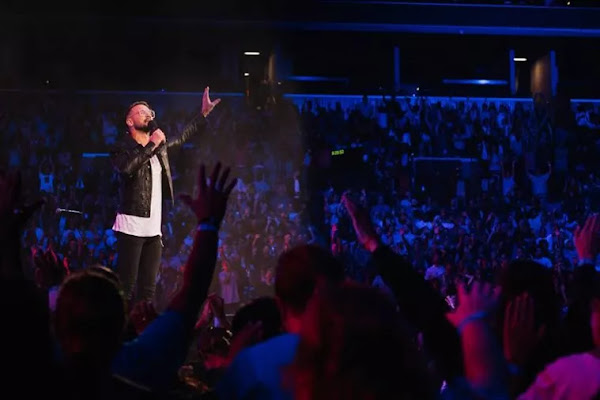


When a months long independent investigation found credible evidence that Ravi Zacharias leveraged his reputation as a world-famous apologist to carry out years of sexual abuse, the response from the Evangelical community was predictably one of shock, horror and grief.

Many questioned how this pastor could effectively masquerade as a humble servant of Christ and fool millions of adoring supporters? How could this respected intellectual who preached the Gospel of Jesus with clarity and passion brazenly manipulate vulnerable women into providing him with sexual stimulation?

As the empire Zacharias built — all in the name of reaching the lost with the Gospel of Jesus Christ — came crashing down, perhaps the most devastating realization for many was just how damaging the blow his posthumous downfall was to the witness of the Body of Christ. 

From the fraudulent ministry of Jim Bakker in the late 1970s and early 1980s to the recent slew of scandals surrounding Hillsong Church and one of its most popular pastors, Carl Lentz, the phenomenon of well-known Christian leaders engaging in misconduct is nothing new to the Western Church. 

What then drives the dysfunction and lack of health seen in many church leaders today? Why do so many pastors in Western Evangelicalism fail the fame test despite the biblical example set by Jesus Himself? 

The problem isn’t with being a "celebrity Christian" itself; in fact, Jesus was regarded as a celebrity in the first century, as He was known far and wide for His miraculous acts.  

Rich Villodas, the Brooklyn-born lead pastor of New Life Fellowship, explained: “Generally speaking, celebrity and Christianity are not necessarily contradictions in terms because notions of celebrity are often projected onto people,” he said.

Redefining success in a secularized culture 

In 21st century American Evangelicalism, it can be very tempting to shift toward a different model of success — one focused on money, fame and numbers — than the one outlined in Scripture. 

That’s according to Scott Sauls, the senior pastor of Christ Presbyterian Church in Nashville, Tennessee, and bestselling author. He told The Christian Post that biblically, success is defined as demonstrating faithfulness, character and integrity. 

“Integrity means being whole in our lives and in our ministries, and that means that we are whole disciples of Christ following the whole Scripture and the whole way that we do life and ministry, including the administrative part of it,” he explained. 

“While administration and faithful and excellent organization are important to steward God's resources well, the measure of whether or not we're doing administration well is the character with which the churches are run and led.”

The onus is on the Church to "redefine success" — and before hiring, churches must “look deeper into a person’s life, soul and background,” according to Ed Young, the founding and senior pastor of Fellowship Church in Grapevine, Texas.

“We cannot allow someone's great gift to overshadow a lack of integrity in some other area,” he told CP. Many of the pastors who have publicly fallen in recent years exhibited “patterns” that were ignored by those closest to them because of their gifts, he continued.

Egyptian-American pastor and televangelist Michael Youssef of the Church of the Apostles in Atlanta, Georgia, lamented that in the Western Church, many pastors are not shepherds but “celebrities and CEOs of an operation called the church."

"That’s fine if that’s what they want to do, but don't call it the Church of Jesus Christ. Call it something else,” Youssef said. 

“We have become a marketing operation and celebrity preachers. We're not servants of the living God. We're not there to serve God's people, minister to them, admonish them, rebuke, uphold, encourage, comfort and all of these things that the Scripture is very clear about. We have departed from that.”

The secularization of culture, Youssef added, is a driving force behind this phenomenon — and it’s not to be ignored.

“The secularization of the culture at large is impacting the Church, especially those who might not have their feet on the solid ground of the infallible Word of God who are ministering and pastoring out of an emotional, experiential kind of Christianity, rather than the solid Gospel foundational New Testament preaching," he relayed. 

Pastor and author Tim Keller acknowledges that he’s viewed as a “celebrity pastor in some circles.” The founding pastor of Redeemer Church in New York City, Keller’s sermons are heard around the world and his books are read by millions. 

And Keller understands that if he misuses his platform, “a lot of Christians can be put to shame” because of him. 

“And therefore, if God gives me a bigger ‘platform,’ then I actually have a responsibility to not disappoint people,” he told CP. “Not to just look like a great person; I actually have to be holy; I have to actually mortify my sin. I have to have a prayer life. I have to do the stuff that every Christian needs to do. I don't have to be better than other Christians. I just need to be what God wants a Christian to be.”

When pastors get to be “well known,” he said, the praise can turn their heads, the criticism can prompt self-pity and the overwork can cause them to neglect their prayer life. 

“For all those reasons, very often, so-called ‘celebrity ministers and figures’ live lives less consistent with the Christian faith than Christians who are not so famous,” Keller said. 


'Dumbed down what it means to be a pastor'

Young argued that pastors are bred for insecurity: “We want to be cool. We want to be accepted. We want to be liked. And when we do that, we’ll start down that road of compromise.”

Social media also gives a dangerous “wrong impression” of what it means to be a pastor, saying that pastors who get the most views, clicks and likes are the ones seen wearing trendy clothes while standing next to celebrities.

“We’ve sort of dumbed down what it means to be a pastor,” he explained. “When it comes to celebrities or people who are far away from God, you can't play on their playground. You have to meet them in areas that will not cause you to compromise. Evangelism is sometimes used as an excuse for compromise.”

The Church Body must prop up leaders whose aim, desire and vision are organized around the love of God and neighbor — not the person with the most appealing social media accounts, Sauls contended.

“The Apostle Paul didn’t say, ‘Watch your brand or your reputation closely and persevere.’ Sauls added, ‘Watch your life and your doctrine and persevere in that.'"

Christian leaders must wrestle with the tension between Jesus' call to be humble and be careful not to draw attention to themselves, Sauls added.

“That's sort of the essence of humility. It's not that we think less of ourselves; it’s that we think of ourselves less. We don’t brag, we don't boast, and yet at the same time we are called to draw attention to ourselves,” Sauls said, citing the Sermon on the Mount, where Jesus said, “Let your light shine before men that people may see your good works and glorify your Father in Heaven.”

“We have to figure out what that tension is, where on the one hand, we are very shy about ourselves and very boastful about making our faith public in such a way that the world sees a demonstration of the beauty of what Christ does in people and communities.”

Friendship and accountability

Research from the Barna Group has found that pastors can often experience difficulty when making friends. Pastors are more likely than the general population to suffer from loneliness and isolate themselves from others.

The inability of many pastors to keep close friends, Sauls said, is a severe problem in church leadership.

 He challenges pastors and church leaders to ask themselves: “Are there people in my orbit who know me well enough to discern clearly and accurately whether or not I'm walking with Christ? If they sense something’s off, do they also have the freedom to challenge me without fear of punishment or retaliation or being pushed out?”

“The common thread seems to be that the person who falls into those traps has either created or had created for them a situation where they were no longer accountable to anyone or answering to anyone but themselves," he said. "And then slowly they drifted away from having friends and close companions to a different model where functionally they have servants and admirers."

Every individual in a ministry organization, the Gentle Answer author said, needs accountability congruent with their authority.

“I think that’s why God put us in community; I think that’s why Paul had traveling companions,” Sauls stressed.

The “one-anothering” passages in Scripture — Love one another (John 13:34); be devoted to one another (Romans 12:10); Build up one another (Romans 14:19; 1 Thessalonians 5:11) — are “very instructive in terms of how we can create a community life together,” Sauls said.

Young added that while accountability is essential, pastors can “only be held as accountable as they want to be."

"You can’t legislate morality and purity," Young said. "It has to come from that relationship with Jesus and walking with Him and being as wise as a serpent is innocent as a dove."

“When you're down and emotionally drained, you're susceptible to temptation. You can over eat, over sex, overspend — it’s deadly,” Young warned, adding that the overarching issue is a “personal one with the pastor and his relationship with God, his spouse and others around him.”

“You can have all of the elders and boards and meet with people for prayer, and all of those things are great, but at the end of the day, it's a person's standing and lifestyle before God. … It's a sin issue and it's a holiness issue.”

In addition to demonstrating transparency with his accountability partners, Youssef said that three people are aware of his whereabouts at all times. He releases his finances and tax returns to five members of his leadership and his technological devices are fully accessible to his spouse and staff.  

Such measures are “necessary,” Youssef said, adding that everyone — regardless of their title — is “very capable of self-deception.” 

“We can never get to the point where we say, ‘I trust my own judgment,’ because you cannot,” he said. “Scripture tells us the heart is deceitful above all. So what do you do? You build a wall around those areas that are going to cause your downfall.” 

Discipling the next generation 

For the Church to be an effective witness in an increasingly secularized culture, Youssef believes the next generation of church leaders must have a firm grasp on the Word of God and focus on discipleship. He said it is vital to uphold the authority of the Scripture and pass it on to the next generation "unmolested.”

“I tell younger pastors, 'Don't even go into the ministry if you are not going with the absolute commitment to the authoritative Word of God; not the clever quips and the nice stories and the jokes and trying to be a comedian,'” he said.

“'If the Rock of Ages is not under your feet, it’s going to get on top of your head and smash you. If the Rock is not under your feet, holding you, it will crush you.'”

Young emphasized the importance of young pastors finding mentors outside the church who constantly point them to Jesus. He also stressed that being a pastor is "extremely lonely and isolating."

“They need to know they are specifically called by God into the ministry," Young said. "There has to be a moment, a time period, where they understand that. Walk with God each and every day. They need to know they are doing this for an audience of one and are called to please their Heavenly Father." 

“Lean into the Lord for your spouse, for your kids," he continued. "Be faithful as a leader before God, and just let the chips fall where they may. It's about glorifying God and everything that we do, say, touch and feel."

Sauls agreed that for the Church to flourish, young pastors and ministry leaders must make sure that their personal lives align with their “professional faith.” 

“Make sure that you are the same man at the dinner table or same woman at the dinner table as you are when you're leading a Bible study or preaching a sermon,” Sauls advised. “Watch your life closely and watch your doctrine closely. Stay aligned with Scripture and stand under it, don't stand over it. Let it revise you — don’t revise it.”

“If we can follow those two instructions consistently, we'll be fine, and the Lord will be glorified,” he added. 

Pointing people to the cross 

Instead of using their platforms for their own fame and glory, pastors and ministry leaders must continually point people to the cross, Youssef said. He challenged pastors: “Please return to your first love, and allow Jesus to bless you, instead of trying to bless yourself and manufacture a blessing.”

“His blessing is permanent, His blessing is lasting, and His blessing is eternal,” Youssef said. “Go back to the Word of God, uphold the infallibility of the Word of God. Go to the trouble of expounding the Scripture, explaining why these difficult passages are there, go to the trouble of expository preaching because that's the only thing that's going to convert listeners.”

Pastors need to get "back to that to believing that the power to convert is in the Gospel, not in our own slick presentation," according to Youssef. 

Sauls urged pastors — particularly those of successful, growing churches — to routinely examine their hearts and ask themselves: Are we stewarding these resources for good? Or are we distorting them? Are we in this for our own glory, fame, reputation and honor? Or are we in this for Jesus’ glory and fame and reputation? 

“Are we stewarding the things that have been entrusted to us for the glory of God and for the benefit of our neighbor and the flourishing of the priorities that God has put forth in His Word? Or are we using those things to serve ourselves, whether it's to boost our own egos and platforms or line our own pockets?” Sauls asked. 

Sauls assured that there’s nothing wrong with running a well-led organization that prioritizes excellence and wants to flourish financially. “But it all depends on why you want to flourish.”

“Do you want to flourish financially in order to have long pockets and in order to be powerful and have control? Or is it because you want to have a greater capacity to serve your community and bless your neighbors and meet the needs of the neediest among you and the hurting?”

'Pandemic of narcissism': Seminaries respond to the Evangelical church leadership crisis (Part 3)

 By Michael Gryboski, Mainline Church Editor 


The last few years have seen multiple instances of well-known Evangelical leaders entrenched in scandals and misconduct. Some have questioned if seminaries are doing enough to train future pastors to lead churches and disciple their congregations virtuously.

Darvin Wallis, a pastor and founder of Mission U Online, an online biblical education resource group, penned a provocative op-ed published by The Christian Post earlier this year about the problems facing American Evangelical pastoral leadership.

"For about three decades now, the Evangelical church has embraced corporate leadership paradigms. This has worked wonders for the bottom lines of attendance, giving and the number of reported conversions. Yet, it has also created a crisis in leadership," asserted Wallis, the pastor of Mission Lakewood Church in Colorado.

"Church scandals like Bill Hybels, Mark Driscoll and James [MacDonald] are not random anomalies. Scandals are a natural part of the risky corporate leadership structure. We have accepted the corporate, bottom-line goals for the church. We have accepted the corporate personality traits for our church leaders."

As part of his critique, Wallis suggested that seminaries — which aim to prepare students to become pastors, missionaries and religious leaders — are not providing adequate leadership training.

"While seminary prepares pastors for scholarship, we graduate with nearly no knowledge on how to practically lead a church," continued Wallis, who received a master of divinity from Denver Seminary. 

In its place, he argues, things like books and conferences are "helping to create" a "church leadership industry" that is "forming the ethos of the American church."

As part of this series on the church leadership crisis, The Christian Post interviewed seminary leaders about how their institutions prepare pastors to lead churches and their take on Wallis' criticism. 

'Evangelicalism is in a very problematic place'
Mark Labberton, president of Fuller Theological Seminary in Pasadena, California, was ordained in the Presbyterian Church (USA) and had about 30 years of pastoral experience before becoming head of the academic institution founded in 1947 by radio evangelist Charles E. Fuller. 

Fuller is based in Pasadena and has satellite campuses in Arizona and Colorado. 

Labberton, who has led the seminary since 2013, believes that the "cultures of many churches and denominations or networks" will often deprioritize a "transformative life" and focus more on "cleverness and shiny objects."

"The caverns that exist between the mind, the heart and the hands of many Christians reflect the Church's failure to disciple people deeply and holistically," he said.

Labberton said he finds the arguments of Wallis' piece merited.

"Evangelicalism is in a very problematic place, and the issues Pastor Wallis names are among the reasons," he said. 

Labberton said Fuller seeks to provide "formational education for diverse Christian leaders." That means "measuring and retuning ourselves to be aware of the personal formation of our students" and to provide "the knowledge and formation needed on the ground to best minister to those God is calling our alums to serve."

"The whole of the scriptures need to inform a pastor's life and vision," the former senior pastor of the First Presbyterian Church of Berkeley, continued. "In this particular season of the Church's internal and external crises, I feel like we should never be more than five minutes away from reading the Gospels."

"Our central identity comes from the life and ministry of Jesus, not the forms, structures, strategies, budgets and technology of our ecclesiastical industrial complex to which we have yielded," he added.

'Pandemic of narcissism' and 'cardinal vices'

Missiology professor Scott W. Sunquist, who serves as president of multi-site Gordon-Conwell Theological Seminary based in Massachusetts, had extensive pastoral experience overseas, serving in the Republic of Singapore.

Sunquist said that in Singapore, "we had to negotiate government regulations and restrictions, languages and cultures" and wanted to make sure that the Church there "did not simply parrot American Evangelical words, music and even liturgy."

"The big lessons I learned about church leadership had to do with being attentive to diverse cultures and leadership training," he said.

"In some ways, the Singaporean experience encourages me to challenge U.S. seminary students to take their devotions more seriously, to be more committed to cross-cultural mission work and to freely witness to their friends and neighbors."

Sunquist, who became the seminary's president in 2019, brings expertise on Christianity in the non-Western world. He believes that being a missionary can be "excellent preparation for seminary leadership." He observed that through such work, people learn "some resilience and courage, both of which are important characteristics of a pastor or even a seminary president."

When it comes to the problems in the American Evangelical church, Sunquist believes that the lead issue is not "learning from non-Christians," but rather "our unwillingness to confront what the Church Fathers called the cardinal vices."

The "three core vices" that the early Church was concerned about, according to Sunquist, were greed, passions such as "food and sex," and pride. He said leadership failures are the result of "succumbing to these three vices."

"We have a pandemic of narcissism today. Social media feeds our small self-esteem appetite until it becomes a narcissistic monster. Most leaders fall into this trap," he said.

"We see leaders fail because they did not name the demons, and they did not have strong people around them to guide them toward holiness."

Sunquist also told CP that he believes it is "troubling when we reduce seminary presidential leadership to a secular model of business leadership."

"A pastor can learn a lot from secular leaders — I know I have — but they also need to have actually been a pastor to lead pastors," said Sunquist.

The president of Gordon-Conwell noted that his seminary focuses more attention on "discipleship and virtue formation in theological education," including "communal formation." He said the seminary is "trying to be attentive to the culture while providing the best in classical theological education."

"This is intentional, personal and communal formation that is not detached from academic formation," he said. "Thus, we are working hard at biblical contexts — as we always have — but we are now working harder than we previously had to understand contemporary contexts: social, political, economic, etc."   

"Thus, we are adding virtue formation, in the form of discipleship, to the lives of all of our students while they are students at Gordon-Conwell," Sunquist added.

'Unnecessary dichotomy'
Angie Ward is the assistant director of the doctor of ministry program at Denver Seminary in Colorado, where Wallis attended. She has about three decades of experience in church and education ministries. She is also the author of I Am a Leader: When Women Discover the Joy of their Calling.

"Whether at the master's or the doctoral level, our pastoral leadership courses are taught by instructors with a wealth of field experience," she told CP.

"We believe that leadership flows out of the person of the leader; it's not just a skill. Therefore, we strive for holistic formation: not just education in the classroom, but experience in the field and formation through an integrated training and mentoring component."

Ward said she is concerned that there is a "growing but unnecessary dichotomy between 'pastoring' and 'leadership.'"

"But to view the pastor as a shepherd — a theme that is repeated in Scripture in the words of Jesus and the writings of the Apostles Paul and Peter — means that pastoral leadership involves both caring for individuals, and tending to and moving the overall 'flock' toward maturity and mission," she explained.

"The Church is — or should be — more than merely an educational institution or even a mission center. It should be a center for formation — again, moving people toward individual maturity as disciples of Christ, and the gathered community toward public witness of God's love."

Ward said she "would agree wholeheartedly that the American church, broadly speaking, has over-focused on leadership, and on drawing from corporate models."

"I believe the issue is that we — again, the Church, broadly speaking — do not have a clear or robust ecclesiology. We don't understand the nature and purpose of the Church and how it is unlike any other organization in the world," she said.

"Therefore, we default to what we know, which is a 'corporate' model. We need to look not only for different answers; we need to start by asking different questions about Church."


The crisis of leadership in American Evangelicalism (Part 1)

 By Christian Post Editors


Regular readers of The Christian Post are well aware of the moral failures at the highest levels of Evangelical leadership in the recent past. Formerly revered figures such as Ravi Zacharias, Bill Hybels and Mark Driscoll and earlier harbingers like Jim Bakker are the reminders that all is not well within the multifaceted movement that is American Evangelicalism.

When an Evangelical icon such as Zacharias can fall so drastically from the Evangelical firmament, clearly there are cultural and spiritual dynamics at work that require investigation.

CP has tasked three of our reporters, Michael Gryboski, Leah Marie Klett and Brandon Showalter to investigate the problem and possible causes and solutions with a broad cross-section of the Evangelical community. There are obvious factors that must be taken into consideration.  

The rise of the “megachurch” and the consequent vitiation of formal denominational influence and the structures and oversight it provided is certainly one factor.  

Another factor is the hypersexualization of American society, a cultural phenomenon that is one of the first things foreign visitors to the United States notice. Pastors and other Evangelical leaders are impacted by this virulent phenomenon. It should also be noted that American pastors of this generation have a dramatically increased and unprecedented number of women in their churches who are not married and not living with their parents or other relatives. The rising tide of pornography that has increasingly saturated society is another powerful potential snare that Evangelical leaders contend with on a daily basis. In reality, pornography is the Madison Avenue ad campaign for sexual immorality.  

The so-called “cult” of celebrity and the rising corporate model of leadership are other troubling factors surfaced in this series.

Another factor that is also surfaced and that commands attention is that an increasing number of Evangelicals and their leaders are adult converts to Evangelical Christianity, and thus do not have a family background and “grounding in the faith.” As our series suggests, there needs to be more attention given to personal spiritual formation and grounding in the faith in seminary for those Evangelical leaders who did not have the advantage of being reared in such spiritual circumstances.

All of these factors and doubtless more will surface in the days ahead. As people from various Evangelical traditions identify causes and propose answers to the leadership crisis roiling Evangelicalism in America.

CP presents this series as a contribution to that discussion in the hope and prayer they will ignite an ever more inclusive discussion of this critical problem and how it can be addressed successfully for the betterment and flourishing of His church.


Crisis in pastoral leadership: Are the apostolic and prophetic offices being restored? (Part 2)

 By Brandon Showalter, Christian Post Reporter


Amid seemingly unending church and ministry leadership scandals and the exposure of unhealthy structures and institutions that enabled them, are long-lost offices of the Church being recovered? 

The Apostle Paul writes in Ephesians 2:20 that the Church, the household of God, is “built on the foundation of the apostles and prophets, with Christ Jesus Himself as the chief cornerstone.”

In Ephesians 4:11-12, Paul continues that the Lord gave fivefold offices for the edification of the Church, specifically “apostles, the prophets, the evangelists, the pastors and teachers to equip his people for works of service, so that the body of Christ may be built up until we all reach unity in the faith and in the knowledge of the Son of God and become mature, attaining to the whole measure of the fullness of Christ.”

Yet many Christians today have no theological or experiential grid for the first two offices listed, perhaps because the canon of Scripture is closed and the apostles who were alive during Jesus' time are no longer walking the Earth. This view, which is called cessationism, holds that after the death of the last apostle, spiritual gifts like prophecy and the office of a prophet are no longer operating. In practice, however, some churches and denominations adhere to degrees of this view, allowing for certain expressions of the gifts to operate in the church. Others have admitted to believing in the continuation of the supernatural gifts of the Holy Spirt but being, for all intents and purposes, "functional" cessationists.

With such a theological paradigm, the absence of the offices of prophet and apostle in the contemporary church has yielded an often top-heavy congregational structure that is led by a pastor. Teachers teach the Bible in Sunday school. When many think of the office of evangelist, guest preachers and the-late Billy Graham and his stadium crusades come to mind.

To dive more deeply into these ecclesiological issues, The Christian Post spoke with Ron Myer and Larry Kreider, two leaders with DOVE International — an interdenominational global family of churches and ministries on six continents. CP also spoke with Pastor Derwin Gray of Transformation Church, a nondenominational Evangelical congregation in Indian Land, South Carolina.

The interviews explore what has gone right and what has gone wrong in recent years, and where they see God taking the Church at-large in the coming decade.

Substantial paradigm shifts are occurring for many Christians, they say, and sincere believers would be wise to heed what the Holy Spirit is doing, even if it seems unfamiliar. 

How have the fivefold offices gotten lost and how are they being reclaimed?

According to Kreider, a major issue afflicting the Church is what he calls “clergy-laity mentality.” He describes it as a pervasive mindset where the paid clergy leads the church and they are called “pastors.” They do most of the ministry work and laypeople serve the ministry of that pastor.

But whatever terms are used, DOVE International contends that leaders in the local church are more like elders or overseers.

"We do believe that all five of these gifts are needed. And on a broad-based level, you need the apostles and prophets working together, hearing from God together. To use military terminology: apostles [are] the generals. The prophets being the seers, they’re the ones getting the intel [from God],” Kreider asserted.

For a local church, there needs to be impartation from all those gifts, equipping from all those offices. 

Yet, this is strange doctrinal territory for many people, as it was for Myer.

“In my upbringing, there was nothing ever spoken about apostles and prophets. There was no grid for it,” Myer explained. But that all changed as he became “filled with the [Holy] Spirit and into an understanding that Ephesians 4 is here to equip the saints for ministry and that the equipping of the saints is a primary role of the Church."

"To equip people to minister to those who are not part of the Church, not just to minister to each other," he detailed. 

The apostles are the builders, the church-planters, those who are trainers and equippers.

And the prophetic is to come alongside them to help guide and speak to that — what is the Lord saying right now in the present, Myer said. He added that all five offices are needed to work together so that the Church can hear the full counsel of God. 

“I think somewhere along the line we slipped into [the church mode] where it’s easy to just have a pastor to lead the church. So we’ll just call him a pastor," Myer said. "And in some cases, you have evangelists — that’s their primary gift — but they only knew pastors, so they put the term pastor on them. But they’re frustrated because they're not functioning as a pastor because that is not their primary gifting. People put that label on them, and then they’re trying to be somebody that they’re not versus truly functioning in who they truly are."

Myer believes that God has given a "greater definition" that brings "greater freedom."

"With greater freedom then comes greater function," he contends. "With greater function comes the ability to be who God really created them to be. We’re working to usher in and continue to expand the Kingdom of God, His way of doing things, as we pray, 'Father, let Your Kingdom come, may your will be done, on earth as it is in Heaven.'” 

If the fivefold gifts can work together to see each and every believer functioning and bringing the Kingdom into their workplace, in the marketplace, into their school, a greater expression of Jesus is manifested in society, he maintained. 

What are small-a apostles?

Kreider believes that an apostolically inclined small-a apostle is motivated by and is thinking on a macro, big-picture level, and wants to see the Kingdom of God extend across their city, state, region, nation and world. As with any other spiritual gift and vocations, this gifting is to be called out and affirmed by others in the Body of Christ.

To function in these gifts, one needs to see the giftings in others, Myer added. It’s not just someone who prophesies or carries a prophetic gift, but someone who trains up and pours into others so they can mature spiritually. 

For those who are hesitant to embrace this thinking because they have concerns about what has been referred to as the New Apostolic Reformation or the abuse or misuse of spiritual gifts, the DOVE leaders urge Christians to revisit the Word. The New Apostolic Reformation is a phrase coined by C. Peter Wagner to describe a movement within Pentecostal and Charismatic Christianity reclaiming the apostolic and prophetic offices.

“I think what has happened is that when the church is run by pastors and administrators, it has played right into the clergy-laity mentality that has ruined the Church," Kreider said. "When you read the book of Acts and the Epistles, you see God using common, ordinary people. You see them being resourced through apostles, prophets, evangelists, pastors and teachers."

The title “pastor” is used for ministry and church leaders today, even those in pastoral roles, but are not particularly pastoral-gifted people, he added. 

“If they lead a megachurch, they are probably apostolic. But since we don’t have room for this language, I think it holds us back from expressing the heart of Christ to people and to be trained to full maturity and fulfill the call of God that is on their lives,” Kreider said.

In fact, the first time he went to a Pentecostal gathering, he sat in the back row so he could leave early “in case it got too crazy.”

Myer added: “For those who have had negative experiences, and there are certainly plenty of them out there, my response is: I’m sorry you had a negative experience. There’s no excuse for it." 

For those who get hung up on titles, DOVE International shies away from them and leans more toward adjectives. 

“I’m not ‘apostle Ron,’ but I do apostolic ministry,” Myer said, defining it as “being a spiritual father to a number of people who I pour my life into ... with one goal, to see them succeed and be all that God made them to be.”

These gifts need to be in operation until the return of Jesus, he maintains, to bring the Church to full maturity and bring as many people into God’s Kingdom as possible.

The clergy-laity mindset trap

Although careful not to blame any particular person or group for the creep of the clergy-laity mentality, Kreider and Myer said that those in clerical roles think they are the paid professionals who need to do all the ministry and that the laity is not equipped to do it.

From the laity side, they argue that the thought process is one that always defers to clergy who are paid to do it, and therefore, they do not have to minister. 

“If COVID has done anything, it has helped much of the Body of Christ realize that when two or three gather in His name, He is in the midst of us. And we believe there is a place for larger gatherings, but the focus is on the two or three,” Kreider said.

“We have great hope for the Body of Christ. It has been a mess, we agree with that. We’ve all been a mess. But He is leading us by His Spirit, and we’re excited about the future of the Body and the future of the Kingdom.”

While not all churches are top-heavy or afflicted by this clergy-laity mentality, Myer believes that amid all of the changes that the pandemic brought, the circumstances have come to model what the fivefold ministry should look like and what true apostles really are.

“There are some places in the world that you can’t even use that term [apostle] because of the abuse and control in the past versus a spiritual father that wants to see those around him succeed. That has a heart and a passion to plant, but then to empower and release those around him,” Myer said.

“I think we have a wonderful opportunity to demonstrate what are the gifts of the Spirit and they are to bring about change, to help people, to see them transformed, to help them with problems and to demonstrate the love of Christ.”

In May 2020, Myer said he sensed the Lord tell him that “in times of uncertainty, you’d better be sure what you’re certain about.”

“Anytime we’re in chaos, that which we really believe will be challenged. And it shouldn’t be changed, because if it’s built on God’s Word, my circumstances don’t change what I believe. I continue to believe until my circumstances change,” he said. 

“I think the opportunity of the fivefold ministry is ... that even when there’s chaos around us, even when there’s a storm around us, there can still be peace in the midst of that. We can still walk in confidence; we can still walk in security.”

Kreider emphasized that American Christians tend to think about the United States, but the truth is that the Church is part of a global Kingdom.

“There’s nothing new under the sun," he said. "We’re believing God for good things in our nation, obviously, but we know there’s a Kingdom that cannot be shaken, and that’s what we stand in." 


An apostolic, prophetic church

For Derwin Gray, lead pastor of the multicultural Transformation Church in Indian Land, South Carolina, how the church understands and defines itself matters.  

“When we talk about the ecclesia, when we talk about the Church, [its] blood-bought people who have been redeemed by King Jesus through His epic accomplishments, His sinless life, His atoning sacrificial death, His resurrection and through the sealing of the Spirit. We are this family,” Gray told CP. 

The way Gray interprets his own church as apostolic is that they, as a group of followers of Jesus, are built on the apostles' message: Christ crucified and risen from the dead. He describes his congregation as rooted in the New Testament and the early church councils and the foundation of the apostles is what drives them. 

A genuinely apostolic church is about the establishment of God’s rule and reign on Earth, and that those who trust in Jesus are part of His new creation, he said.

Gray added that a truly apostolic leader is a messenger planting such churches rooted in the historic realities of the Church. 

To be prophetic, then, means: “Thus saith the Lord.” 

“With the canon of Scripture, thus saith the Lord, is the text, the Scripture, primarily the redeeming work of Jesus through the Spirit to the glory of the Father,” the pastor said.

The gift of prophecy, as explained in 1 Corinthians, is for the purpose of edification, encouragement and speaking a timely word to people. It's to be twofold, he said, both to be “here’s what God says” and those gifted with the gift of prophecy who are used by God to edify and exhort the Church. 

Both leaders who inhabit an office and laypersons who have the giftings can flow in the prophetic in this way, Gray said. 

“We don’t view prophecy as ‘Hey, in three days this is going to happen.’ We view it as God spoke it, here’s the Word, and then the gift of prophecy in encouragement and edification.”

Where the Church is going in the coming years

Gray said there needs to be "local bodies of churches of all shapes and sizes."

“My main thing is that there is qualified leadership with integrity and that people are being equipped for the work of ministry," Gray explained. "That may be a house church or a big church, a small church. I’m not concerned about the form. I’m more concerned about the function. And every believer is a royal priest. Every believer has been enlisted in Jesus’ ministry and mission, and so that’s what we need to do.”

“This is not a job for me, this is a calling,” he said of his own role, “and our staff is called to serve our Body.”

According to the former NFL player-turned-pastor, being an apostolic church doesn't mean that "everyone on our staff is more spiritually mature than someone who works at Bank of America."

"Every believer is supposed to be equipped to be a minister and missionary in how you go about that in various forms, just go about it," he assured. "If it’s a house church, go about it. If it’s a megachurch, go about it.”

This will, however, require a paradigm shift for many American Christians, as many have accepted, perhaps unwittingly, varying degrees of what some call “consumerist Christianity.” 

Gray attributes this to unwise pastors who teach an imbalanced theology where “Jesus basically functions as the dream-giver,” and believers are asked to participate in His Kingdom so that they can reach their potential.

The Gospel, by contrast, holds that Jesus is the King who invites people into His Kingdom by grace through faith, and the Holy Spirit equips in order to join in the call to reconcile everything in Christ, he said, referencing Ephesians 1:10.

“We’ve got to move from consumerism to participation," Gray stressed. "But pastors and leaders have to teach that, and a lot of times they are afraid to because America is a consumptive society and the great majority of the Church is also a consumptive society."

While churches of all shapes and sizes are everywhere, the Church-at-large in America is sick, he lamented.

“And I love [Jesus] too much to water down a message to draw consumers. God is calling people to participate in His Kingdom and it is by grace through faith. Jesus is Savior and Lord who wants to do His life in us and through us. And here’s what’s beautiful: When we get that, it’s so much better than consumerism,” the 50 year old added. 

“And consumerism is like going into the candy store and getting sugar high and being sick for the rest of the week.” 

What has contributed to this, he added, is the seeker-sensitive model that starts with the homogenous unit principle. The principle says if you cater to people who look and think alike and share a socio-economic status and ethnicity, you can grow a church faster. Thus, sermons are crafted for them.

“The problem is that the Bible never says that.  The church is for Jesus,” he said. 

“When Jesus is exalted,” he continued, quoting John 12:32, “it says He will draw all men unto Himself."

Gray believes that many pastors have been baptized into the homogenous unit principle. Many have learned that people really like the rousing, inspiring content, so they forsake the teaching of doctrine and theology and avoid controversial topics.

What that ultimately yields is a “baptized Ted Talk and sprinkle of pixie dust of Jesus sprinkled on top of it,” he quipped. Yet because that has broad appeal, the model makes money, creating the incentive for it to keep going. 

There has to be a reformation among pastors where it is asked: “What is the King Jesus Gospel,” he continued.

“I firmly believe that it is expressed in Galatians 2:20 very beautifully. That I have been crucified with Christ, it is no longer I who live but Christ who lives in me. Though I live in this body by faith in the Son of God, who loved me and gave Himself for me. So Christ, God’s chosen One, God’s Elect, wants to live in us and through us to reproduce His life, and it’s by grace through faith."

Gray and his wife were under the conviction that the early Church was a multiethnic group of believers in Jesus that had unity through the blood of Jesus, of Jews and Gentiles. This is rooted in God’s promise to Abraham that he would be given a multiethnic family. Jesus, being the seed of Abraham, through his redemptive work not only forgives sins but creates a family of brothers and sisters of many colors.

The good news of the Gospel, which centers on the work of Christ on the cross, is that God is getting His family back. And as the family learns to love each other, they image forth the glory of God, and as an invitation into this family as well. 

Yet, as children of the European Enlightenment, American Christians like to break everything down to pieces and parts, Gray said. 

“And the reality is, the Hebraic understanding of our faith is the Hebrew Shema,” Gray said, which is, “You shall love the Lord your God with all your heart and with all your soul and with all your might. And you shall love your neighbor as yourself.”

'Underneath those sandcastles were idols'

Gray warned that there is "no domain in which the love of God in Christ does not influence and flex its muscle."

“And what has happened is that there are a lot of people who were involved in movements where they’ve seen incredible hypocrisy, where they’ve seen core leadership get up and speak an incredible sermon, thousands of people come to faith, but yet the pastors aren’t living the message," he continued.

"And I think for a lot of them, they were baptized into a thin shallow Gospel, and so they’re tired.”

This often sets in motion a process of deconstruction where they become progressive Left, he explained. 

“When you deconstruct Jesus Christ, you’re no longer a Christian,” Gray emphasized.

“As a pastor-theologian, I think the Church needs to be more theological one, not less. I think the Church needs to be more Christological, not less. I think the Church needs to be more Gospel-centered, not less. I think we need to view the Church as an equipping institution.”

Speaking specifically to the American Church, Gray believes that many were like children on a beach building sandcastles. 

“But we didn’t know that the tide was rising and it’s going to wash all that away. COVID-19 has been a rising tide that has washed those sandcastles away. And underneath those sandcastles were idols,” he offered.

He believes the Holy Spirit is challenging the Church, asking the Church if she is ready to do away with those idols, and allow Him to knock them down.

“Are you ready to allow me to tip over political nationalism idol, tip over the greed idol, the pride idol, are you ready to allow me to tip over the pornography idol, and so many more?” he asked.

“And so if we’re in a posture where God is saying, ‘Listen, it’s time for you to rediscover who I am and never forget that individual salvation only exists so God can have a Church, a family. And this family, when Jesus went to the Cross, sin died in His body, but in the resurrection, all of us went to live in His body."

“Thus, treat each other as such.”


Monday, October 11, 2021

Prophetic Intercessor: What God Wants Every Person Over 50 to Know Right Now

 Charisma


For the generation over 50, the Lord wants to remind you that your age is your biggest asset, and your journey has increased in such value that all of heaven is now looking for you. Your weariness does not disqualify you from greatness.

On the contrary, because of your faithful witness and consistent walk of faith, the Lord is now calling on you to help deliver a nation.

"When Abram was ninety-nine years old, the Lord appeared to him and said, 'I am Almighty God. Walk before Me and be blameless. And I will make My covenant between you and Me and will exceedingly multiply you'" (Gen. 17:1-2).

Father Abraham did not even begin to fulfill his divine commission until he was nearly 100 years old. All that had gone before him had been prepared for the plans and purposes of God in the autumn season of his life. Because of the immense weight of responsibility in birthing and discipling a nation, God needed someone He could trust. He needed someone who had already proven himself to be faithful—regardless of the cost. He needed someone who would obey Him, not because it was personally beneficial, but because it was the only choice worth making. Abraham had passed the test.

Moses didn't begin his commission until he was 80 years old (Ex. 7:7). He thought his assignment had been years earlier, but he was not prepared. By the time he met God in the wilderness 40 years later, he had totally forgotten his gift of eloquent speech and told God he was too tired to answer the call (Ex. 4:10). As it turned out, those 40 years of caring for sheep wasn't God's punishment for Moses' failure in Egypt. It was God's divine method of training his heart and molding his character for the true call on his life to set a nation free.

Noah was over 500 years old when he fathered his sons and built the ark (Gen. 5:32). God saw that Noah was a "just man and blameless among his contemporaries" (Gen. 6:9, 7:1). It was not some zealous young champion whom God chose to build the ark and steward an entire makeover of the earth's population; it was an older man who was time-tested and prepared for the challenge. Not only did Noah prove to have the physical stamina for the work required, he lived another 300 years—long enough to see his legacy endure.

Notice that the call on these three patriarchs was to work with the following generation so God's plan could succeed. Each of them was commissioned to work with their sons and those who followed them so that the promise of God would be fulfilled. Moses may not have had the grace to speak as he once did, but God provided him Aaron to mentor. Noah never could have built the ark on his own, so he enlisted his sons to help in the building and carry on the vision for generations following. Abraham raised his son, Isaac, to trust God with his life—literally—and it became the defining benchmark for those who walk by faith.

Scripture reveals that these three men had already lived a full life including favor with man and blessing from God. They could have easily gone into retirement and felt satisfied. But God had something much better in mind. Their lifetime of faithfulness had now produced a priceless commodity—absolute confidence in God's heart and unwavering trust in His plans.

Regardless of the worldly reputation, they had gained or any acquisition of goods, it was this heart after God that had been refined as gold through the furnace of affliction (Isa. 48:10). It was their determination to persevere when tested and remain faithful when forgotten that would establish their names in heaven as history makers. This kind of faith is a sacred treasure that gains its value by being put through fire. It is of incalculable worth. Heaven is looking for the faithful Abrahams to pass this on to the next generation.

The world tells us to stay young as long as possible. We often say, "I wish I were young again." We need to change our perspective. Though there are certainly benefits to having a younger physique with certain freedoms, there is a wholeness of soul, mind and spirit that only comes from a long life in God. It is this matured faith and fine-tuned perspective that is essential in building the faith of future generations.

"Wisdom is with the elderly, and understanding comes with long life" (Job 12:12).

If you wonder why you don't have the same passion or zeal you once did, there's a reason. The grace on your life has changed and He's now asking you to mentor others who can carry the vision to completion. There are sons and daughters ready and willing to pick up the cause and run with it. They just need the wisdom to guide the way and fathers and mothers to walk with.

Because of the cultural shifts that need to take place and the generational patterns that must be transformed across the earth, it's going to take a threefold generational partnership to see it happen. The God of Abraham, Isaac, and Jacob establishes His people through intergenerational relationships.

The call of Abraham is to equip, empower and encourage the coming generations of Isaac and Jacob so the entire household can be established. Now is not the time to kick back, but to step up. I believe those of us who are over 50 have actually gotten better over time and the fine wine that has been aging within us is about to be tasted.

My middle name is Joy, and it has been prophesied over me many times that in my "later years" I would have much joy. It struck me recently how Sarah reacted to her call when she was 99 years old. Having given up on her lifelong dream of bearing a child, she was now told that she would birth a son. Her response?

"Therefore Sarah laughed to herself, saying, 'After I am so old and my lord is old also, shall I have pleasure?'" (Gen. 18:12).

I could totally relate! She said she was simply worn out and tired! And yet—her laugh became a trigger point for a breakthrough. Not only did she see God's promise fulfilled, but the son she birthed was called "he laughs" (Gen. 21:3). Isaac was birthed in joy! Not only did he bring his mother great joy, but his life also produced another generation that would fulfill the covenant promise given to Abraham and change the course of history.

I believe the new wine of the Spirit that is coming upon the earth is partially dependent on the generation of Abraham answering this call from heaven. In this autumn season, there is a convergence of generations and grace to be apprehended that can bring great breakthroughs. The biological clock is irrelevant to those who have yet to see their promises fulfilled.

If you feel like laughing, it's just an indication that revival is about to be birthed through you!

Wanda Alger is a field correspondent with Intercessors for America. She ministers with her husband in Winchester, Virginia. Follow her blog at wandaalger.me.

Tuesday, September 28, 2021

Joseph Prince Twisted The Words Of Jesus In Revelation Chapters 2-3


Start at

Hillsong Hell: Disturbing accusations expose the celebrity-favoured church | 60 Minutes Australia


Saturday, September 18, 2021

Can You Be a Believer Without Being a Disciple?

 BERT FARIAS


In the church today there is much deception because people have been made to believe that their entire consecration is not necessary for them to be followers of Jesus.

Many have never been made to see the degree of hindrance their flesh is having on their spiritual lives.

Most people attend church to learn to be a success in life or ministry, but only a few truly pursue the heart of God.

Charles Finney, the father of modern revivalism, made this piercing statement:

"There is a certain type of Christian that although being constructively involved in the Church and pass off as being very good Christians are useless in revival. I do not mean that they are wicked, but they have a form of piety which has no fire or efficiency and actually repels new believers, and wards off the truth."

True Repentance

True repentance is not what you can get out of God like "your best life now." But it's what God gets out of you, like death to your own plans and desires. At the cross, you surrender and die in order to live for Him and His glory.

True repentance leads to obedience to the faith. You cannot be saved without obedience.

"And having been perfected, He became the author of eternal salvation to all who obey Him" (Heb. 5:9, NKJV, author's emphasis).

If your motivation is not to please God and obey Him, I must doubt your salvation. Your heart has not been changed. Your conscience has not yet been purged from dead works by the blood of Christ. You are still living for yourself.

The big lie of the Western gospel is "just say this prayer and accept the poor rejected Jesus into your heart."

Or "just confess Jesus and you're in." Make Jesus your Savior but not your Lord. Such deception. He is Lord of all or not at all! This is the greatest delusion in modern Christianity. We tell sinners to accept Jesus and He'll give you peace and joy. He loves you and has a wonderful plan for your life. He'll make all your dreams come true.

This concept has filled our churches with false converts and opened up the broad way to destruction for multitudes.

You cannot receive the Holy Spirit until your motivation is to obey Him.

"And we are His witnesses to these things, and so also is the Holy Spirit whom God has given to those who obey Him" (Acts 5:32, author's emphasis).

The foundation of today's church has cracks in it. "Repentance from dead works" and "faith toward God" are not accurately preached.

Or as Paul said it: "repentance toward God and faith toward our Lord Jesus Christ" (Acts 20:21b).

If we could just fill our churches with true converts and move everyone toward the "obedience of the faith," the churches of Jesus Christ would come alive.

"Through Him we have received grace and apostleship for obedience to the faith among all nations for His name" (Rom. 1:5, author's emphasis).

As an apostle of Jesus Christ this was Paul's passion.

You must ask yourself why you are serving God. Is it for the blessings and what He can give you out of life, or what you can give back to Him for giving you His life? That's the basic difference between a true and false conversion.

True repentance leads to obedience and the pursuit of holiness.

"Pursue peace with all people, and holiness, without which no one will see the Lord" (Heb. 12:14, author's emphasis).

Without holiness, you won't see the Lord. Without purity of heart, you can't see God.

"Blessed are the pure in heart, for they shall see God" (Matt. 5:8).

We must recover the message of true repentance and the cross. The coming storm will sweep many away in the Western church until true repentance, obedience to the faith, and holiness are found among us.

Bert Farias' books are forerunners to personal holiness, the move of God, and the return of the Lord. They also combat the departure from the faith and turning away from the truth we are seeing in this hour. Bert's current passion is to promote a culture of the supernatural manifestations and ministries of the Holy Spirit in the church today and to pass it on to the next generation (Passing on the Move of God to the Next Generation). Other materials/resources are available on his website, Holy Fire Ministries. You can also follow him personally on YouTube (Holy Fire Ministries), Facebook, or Twitter.


Monday, September 13, 2021

Carnegie Foundation and Elijah Interfaith Institute to Draft Friendship Pact for World Religions

Press Conference Peace Palace

The Carnegie Foundation and The Elijah Interfaith Institute have announced that they are working on a historic friendship treaty between the world’s largest religions, intending to invite senior leaders from various world faiths—such as the Dalai Lama, the Pope, and the Grand Mufti—to The Hague in June 2020 to sign the historic declaration at a summit to be held at the Peace Palace.

The objective of the initiative is to counter hatred, division, and intolerance, and to enhance friendship, understanding, and collaboration between religious traditions. While most teachings emphasize friendship within, the declaration hopes to extend that to the religious other: “The idea is that spiritual world leaders will promote solidarity between religions. This is also in line with their religions,” commented Erik de Baedts, director of the Carnegie Foundation. “If the religious leaders declare that you can treat each other peacefully, we hope that people realize that you do not have to oppose each other on religious views at least.” (NLTimes.nl)

ONE WORLD RELIGION SIGNED


ONE WORLD RELIGION SIGNED. The signing of the Unity of World Religions ceremony led by Pope Francis has been sealed. The count Down to the Revelation of the Antichrist has started. Pope Francis is true “Peter Romanus” in the Prophesy of the Popes. We as the remnant Church must utilize the time we have now, to aggressively preach the Gospel before the door is closed.


An Open Letter to the Singapore Church Leadership (I’m writing in my personal capacity) – By Rev George Ong


Dr. Simon Chong’s article was published on this website on 4 Sep 2021, last Saturday and the following are amongst the many things he said:

“How much more than the countless souls at risk of hell? In Joseph Prince, the Church is faced with a perpetrator of falsehoods and twisted doctrines, with many of the flocks drawn to it, as well as non-believers being seduced into a completely new brand of Christianity that is totally unlike what the Church preaches. For years, what has the Church done? Our response…Silence.”

“Hence to say one is ignorant and lacks information, that is totally inexcusable. But to have the inertia within to do or say anything, then that is disobedience, a spiritual malaise to a task or responsibility placed on every Christian and even more so Church Leaders & Pastors! For church leaders to continue to treat a heretic like Joseph Prince as a fellow shepherd is just unthinkable!”

“Will you continue to allow falsehood and lies to reign in your midst? Particularly as spiritual leaders, you must take responsibility and do what’s right!”

(If you have missed reading Dr. Simon Chong’s article and my response, please click here)

Upon reading Dr Simon Chong’s article, a friend of mine (who is willing to be identified by name if it becomes necessary) wrote the following to me on 4 Sep 2021:

“Hi George, just to let you know that I have written to the National Council of Churches of Singapore (NCCS) about 2-3 times about 1-2 years ago on what are they going to do with Joseph Prince and his teachings. I was met with silence.”

The Singapore Church leadership cannot remain silent anymore. If leaders choose to stay cowardly silent against the onslaught of Joseph Prince’s heresies, the Church is in dire straits. Silence is not an option. “To stay silent against the onslaught of false teachings is to acquiesce.” (George Ong)

They must demonstrate the courage that is expected of Christian leaders. They must come up front and state their stand. Is Joseph Prince a fellow shepherd or a heretic? They must examine what he said in his sermons and wrote in his books throughout his last 25 years of ministry.

If they can prove that he is teaching sound doctrine according to the scriptures and the church fathers, I will publicly apologize not only to Joseph Prince but also to the entire Christian Community – not only in Singapore but the whole world for falsely accusing him. If need be, I will make amends with concrete works or deeds of repentance.

But if they can’t, they must disfellowship and expel Joseph Prince from the Christian Community if he still chooses to remain unrepentant.

Allowing a heretic to operate under the official umbrella of the Singapore Church and preaching the false gospel for so many years leading many to their destruction is totally intolerable, unimaginable and starkly going against the scriptures.

Because of the inaction (irresponsibility to be exact) of the Singapore Church leadership (not just the present council but also the past councils throughout all these years; not just the council but also every pastor in the Singapore Church, including myself) to deal with Joseph Prince, it has somewhat caused his heresies to spread to the nations worldwide. Germany, which Timo Giesmann hails from (see below for his article) is just one of these nations.

Do we, as leaders of the Singapore Church even feel responsible to start with? Are we going to remain apathetic and pretend that everything is as normal? Are we so afraid of rocking the boat that we have become paralyzed to what needs to be put right? Can we be true to our conscience for failing to act for all these past 25 years and still refusing to act? Have we forgotten that Joseph Prince hails from our own nation of Singapore? So cleaning up the heretical dirt in our own backyard is our basic duty and obligatory responsibility. Period!

Continue reading Rev George Ong

Friday, August 13, 2021

World Economic Forum: Creating a Credible and Trusted Digital Currency


Sunday, August 8, 2021

How the world can ‘reset’ itself after COVID-19 – according to these experts

Kate Whiting, Senior Writer, Formative Content


The Great Reset is a new initiative from the World Economic Forum and HRH the Prince of Wales to guide decision-makers on the path to a more resilient, sustainable world beyond coronavirus.

The economic fallout from COVID-19 dominates risk perceptions, but there is a unique opportunity to reshape the global economy.

Greenpeace International’s Jennifer Morgan, IMF chief economist Gita Gopinath and ITUC head Sharan Burrow discuss how they perceive a reset.

There won’t be many among the 7.7 billion people on Earth who haven’t been affected in some way by COVID-19.

From sickness and the death of loved ones to work shortages and school closures, the pandemic’s ramifications have touched every part of society – and thrown inequalities into sharp relief.

As lockdowns are starting to ease, governments and organizations across the globe are turning their attention to the recovery process – and the opportunity it provides to rebuild in a different way. One that makes the world better for everyone and addresses the other great crisis of our time: climate change.

Continue > WORLD ECONOMIC FORUM

Saturday, August 7, 2021

In Search of the Chinese Roots


Monday, August 2, 2021

Decoding Davos: The Global Endgame

This in-depth documentary will take you on a journey of Klaus Schwab and the World Economic Forum’s bid for total control of the planet.


George Orwell’s chilling line about “a boot stomping on your face forever” from his book 1984 is very close to its ultimate fulfillment. You see, the people who boldly announced that “by 2030 you’ll own nothing and be happy” and that you’ll merely “rent whatever you need” met during the week of Jan. 25, 2021, to discuss plans for a total reshaping of the planet. That’s right, I’m talking about the World Economic Forum, also known as the Davos Class.

The conference kicked off with Klaus Schwab, Founder and Executive Chairman of, World Economic Forum, who claimed 2021 is “a pivotal and crucial year” for our future.

The weeklong conference was attended by representatives from government, banking, business, academia, media, Big Tech, and Big Pharma. Some of the more notable speakers included:

Anthony S. Fauci, Director, National Institute of Allergy and Infectious Diseases (NIAID)

Bill Gates, President, The Bill & Melinda Gates Foundation

Tedros Adhanom Ghebreyesus, Director-General, World Health Organization (WHO)

Kristalina Georgieva, Managing Director, International Monetary Fund

Al Gore, Former Vice-President of the United States

John F. Kerry, US Special Presidential Envoy for Climate

Christine Lagarde, President, European Central Bank

Angela Merkel, Federal Chancellor of Germany

Sundar Pichai, Chief Executive Officer, Alphabet; Chief Executive Officer, Google Inc.

Rajiv Shah, President, The Rockefeller Foundation

There were also Special Addresses delivered by:

António Guterres, Secretary-General, United Nations

Emmanuel Macron, President of France

Benjamin Netanyahu, Prime Minister of Israel

Vladimir Putin, President of the Russian Federation

Ursula von der Leyen, President of the European Commission

and Xi Jinping, President of the People’s Republic of China

The 7 main themes of this year’s Davos meetings were:

How to Save the Planet

Fairer Economies

Tech for Good

Society & Future of Work

Better Business

Healthy Futures

Beyond Geopolitics

Sounds good, right? Well, if you would like everything in your life decided by a cabal of rich, self-congratulating, well-connected insiders, then I’m sure it sounds wonderful. Unfortunately, for the rest of us, who value independence, freedom, and privacy, Davos’ goals of saving the planet and transforming society sound more like an authoritarian battle cry, the likes of which even George Orwell would be horrified by.

No Return to Normal

Davos frontman Klaus Schwab has openly stated that the COVID-19 pandemic was the perfect opportunity to “reimagine our world” and even wrote an entire book about how to do it called COVID-19: The Great Reset. In fact, Schwab proudly proclaimed the world would never go back to normal after the pandemic as if this was an awful thing.

In COVID-19: The Great Reset, Schwab doubled down on his stance of not returning to normal, stating:

Many of us are pondering when things will return to normal. The short response is: never. Nothing will ever return to the “broken” sense of normalcy that prevailed before the crisis because the coronavirus pandemic marks a fundamental inflection point in our global trajectory. – Klaus Schwab

Predictably, Schwab wasn’t the only one who felt this way. He was joined by many governments and business leaders who eerily began echoing almost the exact same statements in the media.

Schwab’s World Economic Forum, the Bill and Melinda Gates Foundation, and John’s Hopkins Center for Health Security sponsored Event 201 back in October 2019. This pandemic preparedness exercise presented an almost carbon copy of what would happen in real life just a few months later.

We’ll leave the subject of the virus’ true origins and nature for another time. But as the panel of experts predicted during Event 201, everything changed very quickly once the World Health Organization declared a pandemic on March 11, 2020. The very same day, the World Economic Forum announced the creation of its COVID Action Platform, serving as a blueprint for reshaping the global economic response to the coronavirus pandemic.

Also released was the Strategic Intelligence Platform developed to “explore and monitor the issues and forces driving transformational change across economies,” industries, and global issues. In other words, seizing control of everything vital to life on the planet and its population.

With these efforts and more, the Davos Class wasted no time with its plans to reshape the world. As former Chicago Mayor Rahm Emanuel (and brother to Dr. “no return to normal” Zeke Emanuel) once stated,

You never want a serious crisis to go to waste. And what I mean by that is an opportunity to do things you think you could not do before.

But the real issue has always been about advancing an agenda to create a global government. The pandemic was the excuse used to accelerate this scheme. And oh, what a scheme it is.

But let’s once again let globalist stooge Klaus Schwab set the stage for the real mechanism that would be used to bring forth all the desired changes of the Davos Class. Fear!

Again, it was Schwab who recognized that,

The spread of infectious diseases has a unique ability to feel fear, anxiety, and mass hysteria.

– Schwab, Klaus. COVID-19: The Great Reset

Indeed, the fear-induced hysteria from a public health crisis caused the exact scenarios Event 201 had gamed out just months earlier. COVID-19 served as a wrecking ball unleashed to upend every facet of life. This worldwide social engineering experiment proved largely successful as societies worldwide were transformed in a couple of months into totalitarian regimes demanding compliance with draconian measures enacted to “stop the virus from spreading.”

In the US, it was billed as “15 Days to Slow the Spread”. Citizens consented to measures that would have been considered unthinkable before the outbreak, such as social distancing, face coverings, contact tracing, business closures, and travel restrictions. All aspects of life were totally upended. Fortunately, the death rate from the virus was nowhere near what was predicted in Event 201. However, suicide rates, domestic violence, depression, and substance abuse all surged as the lockdown itself proved more menacing than the virus.

But guess what? All of this human suffering was predicted by the Davos Class. They knew it would be challenging for developing nations and minorities. They were fully aware a crisis of this magnitude would further widen the wealth gap between the rich and the poor. They had foreknowledge of the extreme damage that would be done and the toll it would take on human health, wealth, emotional and spiritual well-being. But these sick, twisted, power-hungry vampires would use all of this chaos as part of their endgame. Their hope is that by making these inequities more visible, you will readily accept their pre-planned solutions. And this is how they plan to do it.

Building Trust for Global Governance

One of the main themes of January’s Davos meetings was centered around “building trust.” In fact, Schwab believes that one of the most critical issues for their plans to succeed is a renewal of trust.

The Davos Class are pulling out all the stops to get you to agree with their plans. But, they can’t do this smoothly without your trust. You see, this global game works by manufacturing your consent through sophisticated propaganda, predictive programming, and flat-out brainwashing. Unless you explicitly say no and do something to resist the plans of the Davos class, they’ll take your silence and complacency as permission to proceed with their agenda.

This is why they love to use words like inclusive, equitable, resilient, sustainable, multi-polar, collaborative, and social justice to make it seem like you’re being invited to the table to help make decisions. But, in reality, all of the decisions have already been made for you. And none of them are true for your benefit.

But the Davos Class isn’t stupid. They realize that many are on to their schemes and have acknowledged that The Great Reset sounds like a nefarious global conspiracy. So, they’re resorting to gaslighting tactics like this video about The Great Reset to get you to doubt your suspicions and paint anyone contradicting their narrative as a quack.

Yeah, they love to dismiss any reports of their wicked agenda as “conspiracy theories.” But this sort of propaganda is nothing more than a magic trick. It’s street corner sleight of hand with professionally produced videos, reports, and clever marketing.

They desperately want you to believe they care deeply about you and are appalled by any resistance. How dare you even think to question them and seek out answers for yourselves!

Trust the experts. Trust the government. Trust the bankers. Trust the science. Trust the plan. Trust the Davos Class!

The COVID pandemic is just the first phase of the plan to get you to surrender to their objectives. What else do they have in store?

Agenda 21/2030 and Collectivism

In searching for a new enemy to unite us, we came up with the idea that pollution, the threat of global warming, water shortages, famine, and the like would fit the bill … All these dangers are caused by human intervention, and it is only through changed attitudes and behavior that they can be overcome. Then, the real enemy is humanity itself – Dr. Alexander King, Co-founder of the Club of Rome.

The First Global Revolution, A Report by the Council of the Club of Rome by Alexander King and Bertrand Schneider 1991

The diabolical plans to formulate a global government were fomented long ago. The Club of Rome has played a huge role in it, going all the way back to 1972 with its report, The Limits to Growth which essentially blames all societal problems on too many people consuming too many things. One of the primary ways this global syndicate of banking tycoons, intellectuals, scientists, bureaucrats, and their cronies planned to achieve their New World Order was by promoting the threat of Global Warming, which today has morphed into Climate Change. The ruse of climate change gives global technocrats the pretext to change the world by demanding Net Zero Carbon Emissions that would destroy the fossil fuel industry and completely alter the way the world operates.

The threat of environmental crisis will be the ‘international disaster key’ that will unlock the New World Order. – Mikhail Gorbachev

After centuries of running all of the industries that pollute the earth and filling it with poisons, they now want you to believe they have a plan to right all these wrongs. But the Club of Rome, World Economic Forum, and United Nations aren’t the only groups advancing this scheme. There’s also the World Government Summit (WGS), among many other organizations and think tanks working to bring about their dream of global government.

The modern offshoots of The Limits to Growth report are Agenda 21 and the Sustainable Development Goals of Agenda 2030 developed by the United Nations. Is it a mere coincidence that a global pandemic happened at the start of 2020 just in time to “usher in a decade of ambitious action” in a bid to seize complete control of the planet? Is it by accident that this pandemic has also been used to propel the climate change agenda into overdrive?

Another relevant question is who gave the UN this authority? I never voted for António Guterres, the current Secretary-General of the United Nations, or any previous ones, and I’m sure you didn’t either. But back in 1992, a bill was passed in the United States House of Representatives to commit the country to implement Agenda 21. It was sponsored by current House Speaker Nancy Pelosi and supported by current Senate Majority Leader Chuck Schumer and Senator Bernie Sanders. Though this bill never passed in the Senate, many of its principles have been implemented over the years. No matter where you live, chances are your country has enacted similar laws without your consent.

Concepts like social justice, universal basic income (UBI), and Green New Deal policies all stem from Agenda 21 and, when fully in place, will do much more harm than good.

Thinking that most people are either in agreement with these plans or still locked into the matrix of false reality, the UN even had the audacity to create a website declaring a New World Order with “happiness, well-being, and freedom of all life on Earth by 2050” that brought so much blowback that they eventually removed it.

The Davos Class and their globalist minions love to pretend that their plans will benefit all humanity while continuing to hold most of the world’s wealth and resources within their own coffers. But, while they promise global equity, they never reveal that it means everyone will be equally poor and dependent on technocratic overlords for every crumb on the table.

Over the years, many brave souls such as Rosa Koire, author of Behind the Green Mask, and Patrick Wood, author of Technocracy Rising, have exposed their attempts to pull a bait and switch and leave the 99% with absolutely nothing.

At the heart of Agenda 21, Agenda 2030, Build Back Better, Climate Change, and The Great Reset is collectivism. But, as a pioneer of research into plans for global government, G. Edward Griffin has also explained how collectivism is nothing more than a marketing ploy to get people to give up their individual rights and for countries to give up their sovereignty to global elites.

The Insidiousness of Public-Private Partnerships

Indeed, the World Economic Forum’s main purpose is to function as a socializing institution for the emerging global elite, globalization’s “Mafiocracy” of bankers, industrialists, oligarchs, technocrats, and politicians. They promote common ideas and serve common interests: their own. – Andrew Marshall, World Economic Forum: a history and analysis

One of the biggest takeaways from Davos 2021 was the constant call for public-private partnerships to lead the way in achieving global change. This “PPP” buzzword is a fancy way of saying fascism or merging corporations and government into one totalitarian entity.

What could go wrong with merging the efforts of global corporations like Bank of America, BlackRock, Facebook, Goldman Sachs, Google, JPMorgan Chase, Microsoft, Palantir Technologies, Pfizer, Thompson Reuters, and VISA with government agencies and civil society? After all, according to Salesforce CEO Marc Benioff, CEOs were the heroes of the pandemic! The scary part about all of this is that Davos men like Benioff really believe this and insist that you believe it too. After all, they’re really the “good guys” in all of this.

These and many other transnational corporations have seized control of our food supply, economic systems, transportation, technology, media, utilities, natural resources, health systems, and entertainment industries by cooperating with governments. These powerful multi-million- and billion-dollar corporations have grown into a beastlike system of control that dictates the game's rules in each of their industries and are out to destroy independent operators.

Enter Stakeholder Capitalism

If we are the new American slaves, then who is our master? The New Master, like some monster, escaped from the laboratories of a noble experiment called the American dream, is the sum total of an amoral coupling between government and business. It looks like a monolith hybrid that is neither government nor business and is composed of individual strands of power that include the president, Congress, the courts, many governing bureaus and agencies, and an immense cluster of multinational corporations as wealthy as great nations. – Gerry Spence, Give Me Liberty!

To deal with the growing backlash to the greed and control exerted by the Davos Class of powerful CEOs and bureaucrats, Klaus Schwab has invented a new economic model called Stakeholder Capitalism, where private corporations are granted trustees the society.

Here’s where that “trust” word comes up again. Along with the new book, Schwab has penned The Davos Manifesto, redefining the role of a company to fulfill a broader role in achieving environmental, social, and good governance objectives.

Schwab again attempts to gaslight the public into believing that corporations can become altruistic, uphold human rights, and level the playing field to achieve equality. This is like trying to convince people that a leopard really can change its spots. Instead, they are trying to persuade us that the billionaire club is tired of operating soulless, money-grabbing machines, destroying the environment, and really, yes, want to help the little guy. Be warned, though, because as the Bible says, Satan’s ministers love to transform themselves as angels of light!

And following this pattern, greedy globalists like John Rockefeller, Andrew Carnegie, and Bill Gates all transformed themselves into “beloved philanthropists.” Unfortunately, it seems like this is also the future path of the current wealthiest man alive, Jeff Bezos of Amazon.

But how can anyone in their right mind believe this, given that Bezos’ company conspired with Google and Apple to remove an entire social media platform (Parler) from the internet? Big Tech companies have obliterated free speech. It has nothing to do with the Democrat/Republican divide, but whether or not you agree with the tenets of the Davos Agenda.

On the surface, Stakeholder Capitalism sounds good, but dig a little deeper, and all you’re going to find is a pyramid scheme with a smiley face sticker, and you are still at the bottom. Stakeholder Capitalism and The Davos Manifesto will only increase the control corporations and their billionaire owners exert over every area of the human experience. Davos’ newly polished schemes would completely usher in the age of full technocratic dominion. They already proclaimed they want the 99% to own nothing. So why would anyone in their right mind believe this new wave of propaganda promising that mega-companies will become instruments of good?

The Fourth Industrial Revolution and Promised Utopia

The world is at a crossroads. The social and political systems that have lifted millions out of poverty and shaped our national and global policies for half a century are failing us…

Public trust in business, government, the media, and even civil society has fallen to the point where more than half of the world feels the current system is failing them…

It is in this precarious political and social context that we face both the opportunities and the challenges of a range of powerful, emerging technologies—from artificial intelligence to biotechnologies, advanced materials to quantum computing—that will drive radical shifts in the way we live, and which I have described as comprising the Fourth Industrial Revolution. – Klaus Schwab, Shaping the Fourth Industrial Revolution

The real Davos Agenda centers around using the fraud of Climate Change to usher in a technocratic, transhuman, Fourth Industrial Revolution complete with autonomous vehicles, the internet of things, advanced artificial intelligence, smart cities, and the internet of bodies to connect all humans with machines. So yes, Schwab has openly stated that “the future will challenge our understanding of what it means to be human, from both a biological and a social standpoint.”

The Davos Class wants to control the land, air, water, and every resource on the planet, including humans. It’s why you and I are, and all resources on the planet are referred to as “capital” in Stakeholder Capitalism. It’s also why COVID-19 provided the perfect gateway to advance the agenda to digitize everything and accelerate authoritarian control. Without the guise of a pandemic, where people were made to fear for their lives, they would have never been able to get this far so fast. Digital currencies, digital IDs, worldwide 5G coverage, biometric security, and an advanced global surveillance state is the true endgame. The Davos con cannot be fully implemented without it.

With talk about how much leisure humans will have once robots and artificial intelligence are taking care of the menial tasks people used to do, many have bought the lie that the Fourth Industrial Revolution will bring freedom and a new utopian era. Maybe this will happen for the Davos class, but what will become of the millions and even billions who will lose their jobs and livelihoods thanks to all this automation? Perhaps more future planned pandemics will spare them the indignity of becoming a serf or mere chattel serving the ruling class. Bill Gates sure seems to be thrilled with the possibilities (of another pandemic).

Perhaps no one has laid out the true agenda of the Davos Class better than the late Aaron Russo, who stated:

The end goal is to get everybody chipped, control the whole society, and have the bankers and the elite people control the world.

This journey has taken us inside the devious minds of those who believe they are better, smarter, and worthy of making decisions for the rest of us. Decisions that will take away all of our God-given freedoms and plunge us into the depths of slavery and genocide.

But it is we who need to be reminded to use the tools God gave us to defeat the evil within ourselves and in this world. Though this is not a fairy tale, the lessons of one of the most iconic tales still stand true. We need to stop cowering in fear and find courage like the Cowardly Lion to overcome increasing despotism. We need to disengage from propaganda and utilize the full capacity of our brains like the Scarecrow. We need to stop allowing them to divide us and have our hearts renewed and filled with love like the Tinman. We need to awaken out of the dreamlike state we’re in like Dorothy and realize what happened. Then, when we arise from the slumber induced by the media shills and globalist entities pulling their strings, we’ll see that they are just mere men and women behind a curtain trying to manipulate us like the Wizard of Oz.

The only way they win is by deception, fear, and misplaced trust.