Saturday, September 6, 2014

Persecution and the Return of Christ by Dr Michael Youssef

Michael Youssef
Michael Youssef explains what's really happening in Iraq. (YouTube)

Below is a special video I want you to watch. For those of you who have seen news reports of the persecution and political turmoil taking place in Iraq, this is an explanation of who ISIS is.

Last week I joined my son Joshua, executive vice president of Leading The Way, in the studio to put together a special video addressing the many questions we were receiving about what's happening in Iraq. I hope it will help you better understand what is going on in the Middle East and what we as Christians can do. If you would like to watch the full video with more details, click here.


Unless otherwise specified, the opinions expressed are solely the author's and do not necessarily reflect the views of Charisma Media.

Tuesday, September 2, 2014

City Harvest Saga continues. Analysis into the wealth of City Harvest Church (part 2)

by Think free and fair

It has been two years since I wrote an analysis on the wealth of City Harvest Church (CHC). This week, news broke out that the Pastor has been arrested over alleged misuse of church funds. It is really amazing that the most fervent defenders of the Pastor are the very victims whom he was alleged to have abused - the stakeholders of City Harvest Church. A business with such loyal following among its stakeholders can easily survive adversities. From this single characteristics springs forth strengths that I shall outline in the subsequent paragraphs. Again, please read this article as a business analysis and not an insinuation that CHC is acquiring wealth through questionable means. I apologize upfront if some readers are still offended.

My observation of events that followed after the arrest has reaffirmed my belief on the wonderful business characteristics of CHC. In addition to the 14 points raised in my first article, I have more to add here;

15. Extremely forgiving customers who will keep coming back for more no matter what

CHC members have taken plenty of battering from the public this week. The moment a person reveals he is from City Harvest Church, people will look upon him like a brain-washed idiot who is unable to see the obvious "truth" (verdict is not out yet, so nobody knows the truth. Wait for Pastor to tell his side of the story first).  The mere association with CHC brings embarrassment.

When a business has such a firm grip on its customers that they refuse to go away despite suffering lots of abuse, this business is on solid ground.

Any business(even reputable ones) that has been in existence long enough will eventually make a big screw-up or even get indicted in scandalous frauds. However, if that business has loyal and forgiving customers like CHC's, it can be assured that its customers will probably keep coming back. It is very hard to erode its customer base as they can take a lot of beating before saying goodbye. Such a business is certainly built-to-last.

16. Very easy to raise money from loyal and trusting shareholders

CHC has a special characteristic in that the customers are also the shareholders because CHC raises funds from its church members.

In my first article, I concluded that if CHC were listed on the Singapore Stock Exchange, I will surely buy it. With the benefit of hindsight, some netizens sneered at this conclusion. They said that I would have lost lots of money this week if CHC were listed as a stock. If CHC were an average business, I would certainly have lost my pants. Most stocks would have crashed on allegations that the Founder has defrauded its shareholders. Shareholders will sell first and ask questions later. Not CHC. Its loyal and trusting shareholders will probably buy on the dips/crashes and no need to ask questions at all. Their faith alone in the company is enough.

With such loyal shareholders, it is very easy for a company to raise new funds for future expansion. It can set up building funds to buy new buildings to house its ever-rising membership. In fact, this was exactly what CHC did 2 years ago when it bought Suntec City.

17. Highly motivated and loyal employees who will work for little money with great passion

City Harvest Church has a unique stakeholder characteristic. The extremely loyal customers and shareholders as mentioned above are also the same group of people who are the employees. Therefore, it naturally follows that CHC has a very loyal team of employees.

HR departments like to say our greatest assets lie in our human resource. Nothing can be more true when this is applied to CHC. Some CHC members (or employees) work as volunteers for little or no money but carry on their work with great passion and sacrificial spirit. Internet stories abound on how much personal time some members devote to church activities. It is a compliment to CHC members on their self-sacrificial spirit in volunteering their free-time for church work (provided they do not neglect their earthly family duties).

These dedicated volunteers are not paid a salary but perform essential operations for the church. This results in tremendous cost savings for operating the company. The company does not need to pay for this voluntary workforce and yet enjoy amazingly high staff morale. I challenge readers to find me another company in the world with such an amazing workforce. Where can you find a passionate voluntary workforce who not only are not paid a salary but actually are encouraged to pay until tears stream down their cheeks in order to have the privilege to work for the company? Little or no salary, high staff morale, work with passion and dedicaion, even pay to work ... WOW!!

The heavy commitment and sacrifice put in by the employees serves yet another advantage to CHC. The more time and money and sacrifice a person puts into an endeavor, the harder it is to let go when the turn of events suggest that he may be wrong. Once he has invested too much, it becomes very hard to "cut loss". A person faced in such a situation may resort to self-denial as a form of psychological defense mechanism to protect himself from facing the pain of meeting reality head-on. It is this defense mechanism which plays an important role in strengthening employee loyalty to the company in crisis times.

CHC enjoys another advantage with the employee pool. In 2010, 47.3% of its members are below the age of 25 and the majority are young professionals aged 25 to 35. The young workforce injects awesome energy and dynamism into the business at little or no cost because they are mostly volunteers.

Having a young membership works towards enhancing corporate loyalty for a church business. When it comes to transmitting a set of beliefs, it is preferable to start with the young as it is easier to shape and mould young minds. Some friends have jokingly suggested starting an Internet church preaching prosperity gospel to get rich (let's ignore the morals of such an enterprise for the sake of discussion).It will not work. To have a firmer grip on the minds of its stakeholders, the church should ensure that members' lives revolve around the church. The more social interaction, the more time/effort put in, the lesser exposure to outside influences from other churches (or even disapproving parents), the tighter will be the bonds. Left alone in front of the computer, people are more discerning and analytical without social pressures from the crowd. Just a few simple searches on Youtube turns out videos highly critical of Prosperity Gospel.

http://www.youtube.com/watch?v=ymBzhmaou7U&feature=related

http://www.youtube.com/watch?v=82owdNdAy58&feature=related

Full-time CHC employees are loyal for a good reason. They are very well rewarded financially. Although CHC is registered as a charity, in the 2008 financial statement, CHC distributed $2.9m out to charity and spent 3.2 times more ($9.29m) on its own employees. This will motivate its volunteer workforce to work hard to get a chance to join its full-time staff.

To sum up, with the extremely loyal team of employees, shareholders and customers, CHC as a business is unbeatable.

18. Need not incur any expense to deliver on customer promises

This business characteristic distinguishes City Harvest from all other businesses I have encountered. If a customer entrusts huge sums of money to a bank which promises 30-fold, 60-fold, 100-fold returns and the bank does not return a single cent, the customer can sue for fraud. If a Prosperity Gospel church makes similar promises and fails to deliver, the customer will have to die first and find out the truth on Judgment day. In the mean time, the Church can cite the Bible story of Job and tell its followers to be patient. Better still, a sharp businessman can turn adversity into opportunity by telling its followers the reason they are not prosperous is that they have not given enough to the Church. Did you give until your heart breaks? Did you give until tears stream down your cheeks? If not, do not expect God to repay you with prosperity in Harvest proportions.

The CHC business is able to collect revenue on a service offering that does not require expenses to be incurred in its development. Even better, if delivery quality falters, tell the customer it is his fault because he did not pay enough. The customer has no way to verify on this claim. He probably will pay more eventually. What can be more wonderful for a business than that?

PS: Throughout history, religious organizations have a strong controlling power over their followers because they can make claims that cannot be proven (obey me and you shall go to Heaven), promises that need not be delivered (give me and you shall be prosperous) and threats that cannot be verified (defy me and you shall go to Hell). Under such uncertainty, even intelligent people lose their critical faculty to discern out of fear and greed. Christian crusaders were told they will go to heaven if they die in war. Same goes for the Muslim terrorists. More than a thousand years ago, the Roman Catholic Church claimed it could forgive sins on behalf of God so that rich donors can enter the Kingdom of God if they donate enough money to the Church. Behind every great fortune probably lies a great sin, this was great business.

Who knows for sure if they are right? There is no way to know until Judgment day. What we can be sure is that the interpretations of the holy book certainly suits right for those manipulative and self-serving religious leaders (who are exceptions rather than the rule). I believe religions are good with the best of intentions for their followers. Having a religion has its advantages but be mindful of manipulation by people who use religion as a tool to advance their own interest. I have no doubt these people truly believe in their own message, otherwise they could not have been so convincing. Intelligent and even kind people have a way of inventing reasons to convince themselves to justify means that benefit themselves at the expense of others. All of us are guilty of this sin to some extent, including myself.

We are blessed by God with a brain to think for ourselves. European civilization was held back by their religious leaders because they let the religious leaders do the thinking for them for the benefit of the few at the expense of the rest. Try to think freely but fairly for yourself. We can interpret the Bible our own way if we feel uncomfortable with that of our religious leaders. Why should I donate 10% of my income if what is left is insufficient for my parents and personal savings? Instead of 10% of my revenue (salary), would it be better if it were 10% of free cashflow (salary - necessary expenses for my earthly obligations and survival)? In all fairness, family obligations have to come before the church. It is not fair to our parents if we give more money to the Church than them.

I cannot agree with the Prosperity Gospel. It insults my concept of a loving God. If a God who claims to love me rewards me only after I have to give until my heart is broken, then He is lesser than my parents who has been giving to me starting from the moment I was born even before I knew how to give at all.

AN ANALYSIS INTO THE WEALTH OF CITY HARVEST CHURCH (part 1)

AN ANALYSIS INTO THE WEALTH OF CITY HARVEST CHURCH (Part 1)

city harvest church

by Think free and fair

Although I am aware that City Harvest is one of the richest churches in Singapore, I am still shocked that it is rich enough to pay $310 million dollars for a stake in Suntec City. Nevertheless, an entity which is able to amass such wealth is certainly worth studying. I was determined to understand the secrets to the church’s wealth.

I apologize upfront if the points raised give offense to loyal followers of City Harvest Church. Please regard this article as a business analysis of the factors that contribute to the wealth of City Harvest Church, not as an insinuation that the Church got rich through questionable means. The fact is that CHC is very rich and this makes for a fascinating academic exercise to examine its sources of wealth. Just treat it as a business case study. I have tried my best to stick to the facts. Please correct me if there are factual mistakes. However, if there are differences in opinions, please disagree with courtesy.

1. Clever packaging of Sunday services

The income of a church is dependent on the tithes collected (10% of income from church-members). Therefore, the earning power of a church is highly dependent on its ability to retain its existing church members and attract new ones. The larger the church membership, the greater its earnings.

I watched a sample of CHC weekend service on its website.  Compared to the boring Sunday classes I attended as a kid, CHC church service was most refreshing (Watch “The 10 Laws Of The Harvest”). The beginning part resembles a rock concert with good singing and enthusiastic audience. It is an entertaining way to enjoy your Sunday mornings. Going to church becomes a weekly event to look forward to rather than a chore to attend to.

With church services so well packaged for its customers, its customer retention rate and new customer acquisition figures should look good.

2. Extra revenue in the form of advertisements, sales of CDs

This church is unlike the other churches I know. It generates extra revenue through advertisements during its Sunday service (watch the videos). It sells audio CDs on its website. There is an online shopping cart for convenience to those who want to buy online.

3. Efficient collection of tithes

Church-members can pay their tithe online via credit card, eNets or even Giro!! Once members started donating using Giro, the earnings quality of the church improves. Donation collected via Giro tend to be more stable.

With a globalised economy, people travel round the world a lot and may miss Sunday services. In the past, the churches will lose income when these members fail to turn up to pay their tithe. Now, with online payment, they can continue collecting the tithe even when the church-member is working overseas for an extended period of time. With Giro, the church can continue collecting tithes for a few more months even when the member leaves the church as people have a habit of forgetting what they pay on Giro.

4. 30-fold, 60-fold, 100-fold returns on your church donations

This is where the genius of CHC lies and the secret to its superior earning power. In fact, I have yet to encounter any public-listed company on SGX, HKSE, NYSE, Nasdaq that demonstrates better potential.

The pastor preaches that God will give 30-fold, 60-fold, 100-fold returns on your tithe. But, you have to be generous in your donations first so that you will receive in harvest proportions. I guess that is the origin of the name City Harvest. Please watch the video ”The 10 Laws Of The Harvest” yourself in its entirety and interpret for yourself.

It is a message that cleverly uses an astute understanding of human nature to maximize profits. If I were a CHC member, I will be tempted to increase my tithe as much as possible. Not mincing my words, I am doing it out of pure greed. I do not think I will be alone. It is perfectly fine if members of CHC strongly disagree and thinks that I am not representative for most of them. After all, I can only speak for myself.

5. Quality of customers

With the 100-fold return message, the kind of church members attracted will be most conducive to profit-making. Money-minded people will be attracted to the church. These money-minded people tend to be ambitious and have a great desire to make lots of money. Millionaire minds have a higher chance to become rich. Hence, the quality of customers that CHC attracts are of the highest quality. The richer the church-member, the higher is the church’s tithe per member.

Customer quality will be enhanced through the passage of time due to survivor bias. Suppose out of this pool of Millionaire-Mind Christians, 50% become satisfactorily rich and the remaining 50% still unsatisfactorily middle-class. The 50% who got rich will donate even more because they think their source of wealth comes from their donations. It is most unlikely they will cut back on their tithes  because they will be afraid God will punish them by cutting back the returns. If they are not afraid, the church will be there to warn them not to do so. The remaining 50% who did not get rich will be disillusioned and probably leave the church. The loss is of little significance to the church. These people are not rich and their tithes will not amount to much.

Many Christians will be disgusted with the concept of using tithes to get rich. These people will probably leave the church after attending a few Sunday services. Again, the loss is of little significance to CHC. These people will not be highly profitable to the church even if they are rich because they are not going to tithe as much as the others who believe their tithes is the way to wealth.

To the credit of the Pastor, I think he has devised a wonderful process of filtering out non-profitable customers and sucking in the lucrative ones. There is only so much physical space that a church can have to service its church-members. To maximize profits, the church has to ensure that each unit of space is used for servicing lucrative customers.

6. Kill off competition

CHC has tremendous economic moat that kills off competition. In the video “The 10 Laws of The Harvest”, the Pastor cited Law #5 “Your Seed must be planted in Good Ground” which is an effective weapon in killing off his competition – the smaller churches. Many Christians feel that they ought to donate to the needy, smaller churches rather than rich mega-churches like CHC. The Pastor’s argument is that you do not get good returns like 100-fold in the small churches. You have to donate to mega-churches to maximize returns on your tithe because they have a track record (rich church members). In other words, the seed is not planted in good ground when you donate to the small churches. In his own words, ”I don’t always give to the neediest but to the ground that will give the greatest yield”. To illustrate his point, he used an analogy on weak banks and strong banks. You do not deposit your money in a weak bank because it desperately needs fresh funds to survive. You deposit your money in a strong bank which invests your money wisely and yields good returns.

The church has an iron-grip on its members who believe its message. As illustrated previously, its customer base is of the highest quality. This is its track record. Existing church-members will definitely not move to another smaller, needier church with poorer track record.

It has a very strong economic moat as it is very hard for its competitors to get its customers to switch over.

7. Providing a place where the rich can network

As the Pastor said, his church provides a good ground on which you can grow your riches. Rightly so, indeed. For property agents or insurance agents trying to hit their sales quota, City Harvest Church will be an ideal place to hunt for lucrative clients. This church concentrates several rich and money-minded people into a single location. The church offers a unique advantage to sell things. In a religious setting, people tend less to be on their guard and can be more easily persuaded to part with their money.

Businessmen also like to network in places where there are rich and powerful people who will come in handy in future. The Pastor has done a good job in gathering such people in his church and it makes good sense to make use of this advantage by joining the church.

The rich will attract more rich and the gathering moss snowballs to provide an ever-rising pool of donation to the church.

8. Preach what people like to hear. 

As a teenager, I was discouraged when I read Bible verses like Matthew 19:23-24 “I tell you the truth, it is hard for a rich man to enter the kingdom of heaven. Again I tell you, it is easier for a camel to go through the eye of a needle than for a rich man to enter the kingdom of God.” and Matthew 6:24 “No one can serve two masters; for either he will hate the one and love the other, or he will be devoted to one and despise the other. You cannot serve God and wealth.”

It seems like if I become rich, I will be condemned to hell.

In the video ”Rich God? Poor God?”, the Pastor preaches that it is absolutely ok to be rich. Some prophets of God were very rich. (Abraham, David, Solomon)

There is nothing more musical to a money-minded person than to hear that God is on your side in your pursuit of money. The church-members who are more money-minded will love this and donate even more.

9. God pays for the returns, not the church.

The church collects the money, but God pays for the returns. The church does not need to pay a single cent for the 30-fold, 60-fold, 100-fold returns on the donations.

This is as good as you do the work for me, but not only do I not pay you, I shall also collect your salary. You toil and sweat, but I shall eat your bread. God must surely be a miracle worker and people will pay handsomely for his service. I cannot think of a more advantageous economic position to be in to be able to collect money rendered by a miracle worker.

10. Social pressure to conform in church settings and ease of influence

If everyone around you donates, it is hard not to. When everyone else makes sacrifice, the one who does not will look like an outcast. There is tremendous pressure to conform in such a herd setting.

11. Tremendous future earning power

Take a look at the congregation and you will notice the large number of young people. The income growth of young people is the fastest in the population. In the Pastor’s words, “You may be poor today, but you will not be poor all your life”. That is a long-term business plan in cultivating its customers.

Therefore, if CHC can be viewed as a growth stock, its prospects are very bright as its young customers will accelerate its earnings.

12. Stable earnings in times of depression

Besides being a growth stock, CHC can also be viewed as a defensive and safe stock. People pray hardest when they fall in hard times. Strangely, some people have an urge to tithe when they are in financial troubles.

In fact, in the video (The 10 Laws Of The Harvest), a couple came on stage. They talked about the dire straits they were in when they started out. Things change when God challenged them to GIVE themselves out of poverty (exact words from the speaker). Despite not having any money, they still pledged $250 to the building fund. In his own words again, “we often emptied our savings to give to the House of God knowing that this will be the answer to our financial problems”. Hence, not only will the church earnings be stable in times of depression, it may even grow.

13. Using Prosperity as a theme to appeal to customers

The Pastor preaches Prosperity Gospel which resolves around money. His business genius lies in choosing this theme for his church. Money has universal appeal. Everyone worships money regardless of race, culture, age, gender, sexual orientation. In one fell swoop, he has enlarged his market to cover the entire world. It is much easier to convert people to your belief by dangling money and promising great prosperity. After all, who does not love money?

By enlarging his potential market catchment with a greater chance of increasing membership, more donations will flow in.

14. Tax benefits as church is registered as a charity

This creates a huge, unfair advantage compared to all other businesses. This is what landed CHC in controversy. Enough has been said.

If one day the Pastor switches to become a businessman, I will definitely consider investing in the company that he heads and founds.

If City Harvest Church is listed on the Singapore Stock Exchange, I will certainly buy it. It will be one stock that I am confident of hitting a return of 30-fold, 60-fold, 100-fold returns.

PS: People tend not to question critically when it comes to religion. A charming smooth talker can easily sway minds with his interpretation of the Bible. In the final analysis, Faith is about simply believing. You cannot approach it scientifically because there is no way to test religious theories using the scientific method. We will only know the real truth when judgment day comes.

The danger is that there is no accountability on the part of the preacher on whether his teachings are true or not. Even he himself cannot be sure that his interpretations is 100% correct. Given human nature, the interpretations will tend to be self-serving. In fact, it is not only dangerous to the students but to the teacher as well. People will believe their own lies if it yields tempting benefits. That was how Wall Street drank its own Kool-Aid.

While I respect the Pastor for his business savvy, I cannot agree with his interpretations of the Bible. I pray for good health, peace and harmony for my family. Money-minded as I am, I am not comfortable with commercializing my relationship with God by asking for money. The Christian God that I know from my own reading of the Bible is not 财神爷. Of course, if God wants to drop money from heaven on me, I will be more than happy to embrace it.

City Harvest Saga continues. Analysis into the wealth of City Harvest Church (part 2)


Friday, August 22, 2014

CHC Trial - Kong decided on 'what money to spend, how much and where it would come from'

BY FENG ZENGKUN

SINGAPORE - City Harvest founder Kong Hee was the key decision-maker behind plans to sink church funds into his wife's Ho Yeow Sun's music career in the United States, the prosecution said in court on Wednesday.

They also sought to show that Kong closely supervised the other co-defendants. Deputy Public Prosecutor Christopher Ong produced a 2007 e-mail in which Kong had berated Tan Ye Peng for failing to ensure that his wife's China concerts were a success.

"The Beijing and Shanghai events cost us so much money... but at the end, who came? It was a joke!" said Kong in the e-mail. "Time wasted. Efforts wasted. Objectives not met. Money thrown away unnecessarily. I don't get it. How have we become good stewards of money? We tried to save a few thousands on hotels and (threw) hundreds and thousands on result-less concerts."

Kong added: "How I wish I can run the whole show the way I run our church (in) the last 18 years! But I can't... (My wife and I) are putting our lives and destiny at the hands of our disciples, our spiritual children. We hope you guys don't let us down."

While Kong has maintained that he was involved only in the budgeting for the US foray and left the fundraising to others, the prosecution alleged that Kong made decisions about "what money to spend, how much and where it would come from". The prosecution produced statements made by Kong's co-defendants to the Commercial Affairs Department (CAD) to bolster the point.

Kong and five others face various charges for their part in the alleged misuse of some $50 million of church funds to boost Ms Ho's music career, and then to cover up the deed. Several of them allegedly got the funds out of City Harvest coffers by investing the money in sham bonds issued by two companies, Xtron Productions and Firna, which were run by church members. Xtron was Ms Ho's artist manager at one time.

While Kong maintained that Xtron directors had to give approval for company transactions to finance her career, statements made by Kong's co-defendants Serina Wee, Chew Eng Han and Tan to the CAD contradicted this, said the prosecution.

According to the three defendants, Xtron directors were "updated" only after Tan, Wee and Kong had made the decisions. "Xtron directors were not actively involved," said Chew in his statement. "Technically they can challenge (the decisions), but they would not because they are doing the right thing by giving their full support," he said.

Kong disagreed. He said that Xtron directors being "updated" meant their approval for the transactions were sought, and in the end it was the directors who had final say over whether the deals were made.

- See more at: http://www.straitstimes.com/news/singapore/courts-crime/story/kong-decided-what-money-spend-how-much-and-where-it-would-come-201#sthash.Ltek2Eb1.dpuf

Thursday, August 21, 2014

Summary for Kong Hee's testimony on 20 Aug 2014

CHC Confession


DPP produced emails that showed Serina Wee approaching Kong Hee and Tan Ye Peng to find ways to increase sales for Xtron.

One email also showed Kong Hee gave approval.

Kong Hee argued that all Xtron's billings to CHC were legit and commercially viable.

One particular mark-up of $630,000 was necessary as Xtron ran out of money at that time.

Kong Hee agreed that the mark-up of $630,000 caused a loss for CHC... but Kong Hee argued that it actually benefitted CHC to the effect that a financially strong Xtron would be able to fulfill the crossover mandate that CHC could not achieve on its own.

DPP put it to Kong Hee that he had control on income transfers from CHC to Xtron and transfers of expenses from Xtron to CHC, and that Kong Hee was involved in getting the financing for the crossover project.

DPP put it to Kong Hee that in fact he was the ultimate authority in ensuring the crossover project was being financed.

DPP insisted that Kong Hee had to do with the dealings of the alleged sham bonds.

DPP also produced an email that showed Kong Hee telling Tan Ye Peng and Chew Eng Han to find ways to get funds for Sun Ho.

Kong insisted that the ultimate decision makers for the alleged sham bonds are CHC Board of Directors and Xtron's directors.

DPP asked Kong Hee if he had told Tan Ye Peng and Chew Eng Han to look only for bank loans for Xtron and nothing else, would they still have gone ahead to do the bonds?

Kong Hee said "Chew Eng Han is a very persuasive man and is a very tenacious man. He may come back to me a few weeks later and suggest it again..."

Kong Hee further said that he had told Tan Ye Peng and Chew Eng Han to check and to clear the bonds with the lawyers and auditors.

DPP put it to Kong Hee that he was lying when he said he was not involved in the financing because he wanted to distance himself from the bond transactions which he knew to be sham and solely motivated by a desire to channel the Building Fund under the guise of investments to the crossover project.

Kong Hee replied he is a pastor not a financial person and therefore he did not make decision for the alleged sham bonds but he left it to CHC Board of Directors and Xtron's directors to make the decision on the bonds.

DPP continued to show emails that Kong had ultimate control of Xtron's cash flow.

The emails showed that Serina Wee always kept Kong Hee updated on Xtron's cash flow and Serina Wee also sought Kong Hee's instructions when Xtron's cash flow was running low.

Kong maintained again that it was CHC Board of Directors that approved all the decisions pertaining to the alleged sham bonds. Kong Hee maintained that Serina Wee was merely asking him for his opinion.

(Note: Kong Hee terminated negotiations with Wyclef without asking Xtron's directors and this conflicted with his stand that he only acts on Xtron directors' approval)

DPP went on to show evidence that before 2003, CHC was using church funds to pay for Sun Ho's singing career via Attributes Pte Ltd (APL).

DPP went on to show minutes of AGM on 27 Jun 2003, after the Roland Poon incident.

In the minutes, Kong Hee told the Executive Members (EM) that not a single cent of church fund was used for Sun Ho's singing career.

DPP asked Kong if this is accurate.

Kong Hee replied that Brother Foong Daw Ching told him that no church fund was used, so Kong Hee told the EMs that no church fund was used as he respects Brother Foong Daw Ching.

DPP asks again if this is accurate that not a single cent of church fund was used.

Kong Hee said that in his simplistic mind, he followed Foong Daw Ching's advice. On hind sight, Kong Hee felt he should have checked with other people rather than to just believe in what Foong Daw Ching said.

DPP asked how did Hanafi's refund come back to cover crossover's deficit.

Kong Hee told the court that Hanafi had promised to underwrite the crossover and when the Roland Poon incident broke, the board approached Hanafi Wahju to cover the amount APL paid for Sun Ho via a refund of the building fund that Hanafi contributed.

DPP then showed a document that John Lam gave a different story.

John Lam told CAD officers that Hanafi gave wrongly to the building fund thinking that it also covered crossover. John Lam said that the Building Fund gave a refund to Hanafi so that he could re-direct the donation to the crossover.

DPP then asked Kong which is the correct version.

Kong Hee replied that John Lam's testimony should be the correct one..

DPP asked again if it was accurate to say not a single cent of church fund was used.

Kong Hee replied that he was simple minded to believe Foong Daw Ching and he should have checked with others on this.

Kong Hee also said he didn't know that there was a refund from Building Fund to Hanafi Wahju. Kong said he thought it was fresh new funds.

Only later then Kong Hee knew it was a refund of Hanafi Wahju's donation to the Building Fund.

DPP put it to Kong Hee that contrary to his evidence suggesting that he was not so clear about Wahju's reallocation of his Building Fund to the crossover in 2003, Kong Hee was actually the one who wanted the reallocation to the crossover so that he would be able to tell the church that no church funds had been used.

Kong disagreed and maintained that he was just reiterating what Brother Foong Daw Ching had told him.

To be continued....

CITY HARVEST CHURCH trial – Sun Ho was pissed off by online bloggers

TR EMERITUS

Dear TRE,

For some reason the ST is under-reporting the CHC trial. Many key and interesting details are not revealed. Most of the details are found here : https://www.facebook.com/CHCConfessions?fref=ts


The most sensational day was yesterday and here’s the posting:

Summary for Kong Hee’s testimony on 18 Aug 2014

Mr Chew Eng Han (CEH) spent considerable time to query Kong Hee on the Irregularities surrounding the Multi-Purpose Account (MPA).

The unsuspecting donors to the MPA were 28 couples and a few individuals handpicked from the inner circle.

The donations were meant for evangelism through Sun’s concerts in Asia.

(Note : Our understanding is that the… donors’ list to MPA was later expanded to include 50 pastoral staff and other staff. They were told to tithe to a Man of God instead of the church or Building Fund)

CEH confronted Kong Hee and said he felt cheated by Kong Hee as Kong Hee presented a fake account on MPA in 2009.

CEH alleged that Kong Hee lied to the donors and proclaimed a lower figure collected than the actual amount donated.

CEH alleged that Kong Hee lied so that he could claim that the donations were not enough as Kong Hee urged the donors to give more.

Kong Hee countered that the amount he presented in 2009 was after paying Sun Ho $400,000 for royalties and salaries.

(In 2009, the average collection in MPA was $1.5mil-2mil.)

Kong Hee chided CEH that only CEH and his wife made an issue whereas other donors did not say they were disappointed.

Kong Hee further said it is CHC culture not to reveal details.

Kong insisted that MPA is meant not just for the purported crossover but also to cater for Kong Hee’s and Sun Ho’s livelihood.

Kong Hee also countered that MPA donors were the initiators on the donations and they were all willing donors.

CEH went on to show an email that CHC bought $1 million worth of Kong Hee’s products.

Kong Hee insisted that it was the board’s decision.

CEH went on to show evidence that Serina Wee used Hanafi’s company, (FIRNA) account to refund Kong and CEH sought to prove Kong engineered these financial transactions.

Kong insisted it was Wahju’s own initiative that he wanted to bless Kong Hee.

CEH said this is clearly another round-tripping which used CHC funds to purchase FIRNA bonds so as to channel funds to Kong Hee’s personal bank account.

Kong disagreed and said it was Wahju’s own initiative.

CEH then said the bonds are clean and it was what Kong Hee did with the money that made the bonds sham.

CEH wanted to show Kong Hee preached hard to get the money to pay for the penthouse at Sentosa Cove.

Kong Hee sought to show that he preached a lot on soliciting donations due to his love for mission work to reach out to the unsaved.

CEH rebutted that and said it was for Sentosa Cove and the evidence was in a 4.5hr recording.

CEH alleged that Kong Hee mentioned in the recording that he preached like “siao” because he needed to meet payments for the penthouse at Sentosa Cove.

(CEH wanted to use a 4.5 hour recording but the Judge stopped it as Edwin Tong and Tan Ye Peng’s lawyer objected to it repeatedly.)

CEH showed evidence that Serina Wee had Hanafi’s (FIRNA) bank account and Kong Hee had control on how to channel monies to Kong Hee’s personal bank account via FIRNA’s bank account.

Kong Hee denied and said he did not know how Serina Wee had access to Wahju’s company bank account.

But the email evidence showed Serina asking permission regarding some funds transfer via FIRNA to Kong Hee’s personal bank account.

Kong maintained that he was not sure why Serina Wee would have such access to Wajhu’s company’s bank account.

Edwin Tong objected as CEH moved on to show evidence that CHC KL was also used by Kong Hee for round tripping.

Kong insisted the refund via CHC KL was an independent action of CHC KL’s board.

CEH went on to talk about a confession letter where Jimmy Yim (the previous lawyer) wanted Kong Hee to take the rap.

Kong said he wanted to take the rap but didn’t in the end.

CEH insisted Kong Hee never had the intention to take the rap.

CEH also asked Kong Hee to present the confession letter.

CEH went on to ask about the CAD interview with Sun Ho and how Kong Hee lied that it was because of CAD investigations that Sun Ho could not continue with the release of the albums.

CEH said Sun Ho’s passport was returned back to her after they put up a bail of $500k with the court.

Kong insisted investigations by CAD was the reason they never continued the release of the albums.

The investigations gave them no morale to continue.

CEH went on to show evidence that Sun Ho knew that Xtron was bankrolled by CHC.

CEH showed emails that Sun Ho was in the loop.

Kong denied and said Sun Ho didn’t know.

CEH then showed the email but Kong Hee said Sun Ho might not have read.

(CEH said then I will ask her myself before the court…..)

CEH went on to ask if Kong gave to the Building Fund (BF) or gave tithes to CHC.

Kong replied he gave to MPA.

CEH asked if MPA was for his livelihood then how could he tithe to himself?

Kong said his tithe was used for crossover.

CEH asked Kong Hee that from 2005-2010 whether Kong Hee gave tithe to CHC or gave to Building Fund (BF).

Kong Hee said he gave to MPA, not tithe to CHC or Building Fund.

CEH then asked in year 2005-2010, there was one year where Kong went on stage and told the members that God spoke to him (Kong Hee) to up the donation amount and he instantly obeyed and changed the amount (on the cheque) on stage.

How come now Kong Hee say he never gave to the Building Fund?

CEH said Kong Hee was acting on stage.

Edwin Tong and Tan Ye Peng’s lawyer objected but the Judge ruled in favor of CEH and asked Kong Hee to answer the questions.

Kong said he never pledged any money at that moment but gave an offering, Edwin Tong objected on irrelevance…CEH insisted that what Kong Hee did on stage was an act because there is no record of Kong Hee’s pledge or offering (to the BF).

CEH moved on to say crossover is not church mission but Kong Hee’s and Sun Ho’s personal mission.

Kong insisted 2007,08,09 monies were needed for crossover So all his tithes and donations to building fund goes to MPA.

For crossover Kong Hee insisted that the money came from MPA and Kong Hee tithed to MPA.

CEH went on to say he didn’t have the same ulterior motives as Kong Hee and Tan Ye Peng.

When CEH helped them, he genuinely believed it was God’s mission.

CEH went on to show that Kong Hee hired private investigators before the CAD raid in June 2010.

They hired private investigators in March 2010 and they found out all the bloggers’ n forumers’ identities.

CEH showed blackberry messages that Sun Ho said: “Can we shut the mouths of all these haters? Can we take legal action against them?”

CEH moved on to show emails he sent to Kong Hee and Sun Ho, asking them not to worry about the bloggers and the truth will show we are clean.

CEH was trying to show that his state of mind was that he genuinely believed in the crossover project as mooted by Kong Hee.

The blackberry messages showed Sun Ho was pissed off by the bloggers.

Saturday, August 16, 2014

Singer Ho Yeow Sun received over $500,000 in bonuses, advances


BY MELODY ZACCHEUS

Pop singer Ho Yeow Sun received more than half a million in bonuses and advances, including a $30,000 birthday cash gift and an $80,000 "special performance bonus for hits in the US or the United Kingdom" in 2006.

But to divert attention from some of these extra takings, leaders of City Harvest Church allegedly doctored documents to show that sponsors had given the money to her as "personal gifts".

These details emerged on the first day of the second leg of the trial involving six church leaders accused of misusing millions of church funds. The high-profile trial had resumed after a three- month break.

Yesterday, prosecutors tried to show that Ms Ho's former management company, Xtron Productions, was a puppet company controlled by the church's leadership, including founder Kong Hee, who is her husband.

The State is accusing the six of using Xtron and another firm, Firna, to funnel $24 million of church funds into paying for Ms Ho's secular pop music career, and then misappropriating another $26 million to cover that up.

Like at the first part of the trial in May, supporters started lining up outside the Subordinate Courts from as early as 4am for a spot in the 80-seater public gallery in Court 3.

A solemn Ms Ho showed up in court, hand-in-hand with her smiling husband for the first half of the day's proceedings.

One of the accused, Chew Eng Han, a church stalwart and its investment manager who had quit in June, kept his distance from the rest. He did not speak to the other five in the dock, and stood aside from them during breaks.

The trial continues today and prosecution witness Choong Kar Weng, Xtron's director and long- time church member, is expected to take the stand again.

- See more at: http://www.straitstimes.com/the-big-story/chc-funds-case/story/singer-ho-yeow-sun-received-over-500000-bonuses-advances-20130827#sthash.L4jN0pMR.dpuf

City Harvest trial: 5 things about controversial China Wine song


BY LYN CHAN

China Wine has resurfaced. Not the alcoholic beverage but the English single by Ms Ho Yeow Sun. You know the one: The video has images of her gyrating furiously to the music in a low-cut, midriff-baring top and nothing shorts.

When the video made its rounds on social media in 2012 after news of the fund-misuse charges against City Harvest Church founder Kong Hee - Ho's husband - and five other church leaders broke, the local netizen community went wild. But not in a good way. Horror, scorn and disdain were the primary reactions; at their mildest, puzzlement and scepticism at how such a song could help spread the gospel.

On Aug 12, Kong, who faces three charges of criminal breach of trust for allegedly misusing church funds, took the stand. While outlining the plan to break Ms Ho into the US music market as part of a church effort to evangelise using her pop music, revelations about the provocative China Wine single surfaced:

1. In 2006, Wyclef Jean, a Haitian hip-hop recording artiste, was roped in to help Ms Ho. He suggested doing away with the songs that had already been recorded for her debut English album. The reason? They sounded "too white, Caucasian", and she would not stand out from other singers also trying to make a mark in the United States.


Ms Ho Yeow Sun in the music video for China Wine. -- PHOTO: XTRON

2. Jean recommended that Ms Ho go for a new Asian-Reggae fusion sound. This eventually led to the making of China Wine. The noted music producer had earlier created a similar Latino-Reggae sound with pop star Shakira. The explosive hit Hips Don't Lie was the result of the collaboration.

3. China Wine was not the only song Jean recorded with Ms Ho. It was just one in a series of 12 to 13 songs.

4. According to Kong, both he and Ms Ho were both "uncomfortable" with China Wine, even though it was deemed a success and the brainchild of Wyclef Jean, as it did not fit the image Ms Ho wanted as a pop artiste. Jean left the project in 2008 after negotiations over his asking price broke down.

5. The album which featured China Wine was supposed to have been publicised on popular TV shows such as Gossip Girl, CSI and Dancing With The Stars if its big launch had taken place as originally planned.

- See more at: http://www.straitstimes.com/the-big-story/chc-funds-case/story/city-harvest-trial-5-things-about-controversial-china-wine-song-2#sthash.4GdEN5G7.dpuf

Tuesday, August 12, 2014

13 Contrasts Between American and Biblical Christianity by JOSEPH MATTERA

American flag, Bible

It has been evident to numerous biblical scholars that often (if not most of the time) believers (including preachers) interpret the Bible through the lens of their culture. This has resulted in many beliefs, doctrines and practices prevalent in the church that are not in accord with the clear teaching of Scripture. Sadly this is the often the case with the evangelical church in the United States.

Since the United States is so influential, American evangelicals have exported a gospel replete with an American cultural paradigm that is not in line with the Hebraic paradigm of Scripture. Consequently, sometimes in the U.S. pulpit, preaching can come across more like the "American Dream" than sound, biblical teaching.

The following are some of the contrasts between American Christianity and biblical Christianity:

1. American Christianity focuses on individual destiny. The Bible focuses on corporate vision and destiny.

Most of the preaching in today's pulpits in America focuses on individual destiny, purpose and vision. However, a quick look at the Bible shows us that in the Old Testament the emphasis was always on the nation of Israel, and in the New Testament the emphasis was always on the church. Every promise of God in Scripture was given to the community of faith as a whole. Hence if a person was not flowing in the context of the church, or the nation of Israel, they would have never even known Scripture since the average person did not own a Bible and only heard the Word when they assembled with the saints on the Sabbath. Of course, believers had to apply the Word of God as individuals, but they could not conceive of doing this if they were not part of the corporate body of faith. In the Old and New Testaments, there was no such thing as "individual prophecy" since every prophetic word given to an individual had to be walked out in the context of their faith community and/or had to do with the life of their community.

2. American Christianity focuses on individual prosperity. The Bible focuses on stewardship.

Much American preaching today focuses on "our rights in Christ" to be blessed. However, in Scripture the emphasis regarding finances has to do with being blessed by God in order to be a blessing by bringing God's covenant to the Earth (Read Deut. 8:18; 2 Cor. 9:10-11). Jesus promised material blessing only in the context of seeking first His Kingdom (Matt. 6:33).

3. American Christianity focuses on self-fulfillment and happiness. The Bible focuses on glorifying God and serving humanity.

The Great Commandments are to love God and love our neighbor (Matt. 22:37-40). It seems to me that much of the focus from the American pulpit has to do with individual fulfillment and satisfaction.

4. American Christianity appeals to using faith to attain stability and comfort. The Bible encourages believers to risk life and limb to advance the Kingdom.

Much of the preaching in American churches regarding faith has to do with using faith so we can have a nice car, home, job, financial security and comfort. The biblical focus on faith is on risking our physical health and material goods to promote God's Kingdom (read Phil. 2:25-30). Most of the original apostles of the church died as martyrs as did the Apostle Paul, and the hall of faith shown in Hebrews 11 equates faith with a life of risk and material loss for the sake of Christ. Much of the preaching on faith in contemporary churches would seem foreign to biblical prophets and apostles.

5. American Christianity usually focuses on individual salvation. The Bible deals with individual and systemic redemption.

Jesus' first sermon text in Nazareth was a quote from Isaiah 61 (read Luke 4:17-19). American preachers usually interpret these passages in an individual manner only. However, when you read Isaiah 61:1-4 you will clearly see that the gospel not only saved and healed individuals but also transformed whole cities! The biblical gospel deals with systemic sin not just individual sinners.

6. The American apologetic focuses on human reason. The Bible's apologetic focuses on the power of God and experience.

Americans have been trained to defend the faith utilizing scientific, archaeological and linguistic historical proofs to validate the resurrection of Christ and the historic accuracy of the Scriptures. This is because the Enlightenment trap that promotes human reason as the highest arbiter of truth has captivated the American church. However, when we read both testaments, we see the prophets, the apostles and Jesus never based the propagation of their faith on the latest scientific research or human reason but on the anointing, authority and reliability of God (1 Cor. 2:1-4; Heb. 2:1-3).

Of course, biblical faith is the most rationalistic, reasonable faith in the world since it comports with reality more than any other philosophy or religion. However, if the foundation of your faith is human reason, then the first person that has more knowledge than you in science could talk you out of being a Christ-follower. Truly, the fear of the Lord is the beginning of wisdom, not human reason (Prov. 9:10; 1 Cor. 1:17-23).

7. American believers have a consumerist mentality regarding a home church. The biblical emphasis is being equipped for the ministry.

Americans shop for a church today based on what meets their personal and family needs the best. It is almost like a supermarket mentality of one-stop shopping. While it is good if churches attempt to meet the practical needs of families and communities, the focus should be upon equipping the saints for the work of the ministry (Eph. 4:11-12). God may lead a family to a new church plant instead of a megachurch even if the megachurch has more programs to offer. Biblically, it is all about assignment and equipping. If a person is doing the will of God, they will be fed by God anyway (John 4:34).

8. American Christianity promotes a culture of entertainment. The Bible promotes the pursuit of God.

In the typical growing American church, there will be an incredible worship team, visual effects and great oratory. Consequently, we are often catering to the American obsession with entertainment and visceral experiences, which can promote a culture of entertainment instead of cultural engagement. Biblically speaking, some of the greatest examples we have of intimacy with God come from the Psalms in which the writers were in dire straits, with no worship team, and alone somewhere in the desert (Psalm 42 and 63).

Biblically speaking, we should not depend on a great worship experience to experience Yahweh, but we should have intimate fellowship with Him moment by moment, way before we even get through the church doors!

9. American Christianity depends upon services within a building. The biblical model promotes a lifestyle of worship, community and Christ following.

Most of the miracles in the book of Acts and the gospels took place outside a building in the context of people's homes and in the marketplace. In Acts 2 and 4, the churches met house-to-house, not just in the temple. The man at the gate was healed before he went into the temple (Acts 3), which caused an even greater revival to take place.

10. American Christianity is about efficiency. The biblical model is about effectiveness.

Often, the American church is modeled more after the secular corporate model rather than the biblical model. The church is not an organization but an organism that should be organized! In many churches, every aspect of the service is timed to the minute, and there is no allowance for the Holy Spirit to move. What good is an efficient service if people leave congregational assemblies with the same brokenness they had before they came in?

11. In American Christianity the pastor is elected. In the biblical model God calls the pastor.

Many American churches are run more like a democracy than a theocracy that is under God and Scripture. Hence, many denominations vote on their pastors and elders. However, there is not one instance in the Bible where God allowed the people to choose the leader of His people.

The example some use to justify congregational votes for pastors is in Acts 6. However, this passage has to do with the people electing deacons, not apostles or church overseers. However, in 1 Tim. 3 and Titus 1, years later, after the church was more developed, Paul instructs his apostolic sons (Timothy and Titus) to choose the deacons and elders themselves (no congregational vote here).

12. In American Christianity the individual interprets the Bible. In the New Testament the hermeneutical community interprets the Bible.

In the New Testament, when they were grappling with Scripture, they called a council and had dialogue to discern what the Spirit was saying (Acts 15). Paul went to the Jerusalem elders (Peter, James and John) to make sure what he was preaching was of God (Galatians 1 and 2).

Often, American preachers get unique interpretations of a passage and come up with a different angle on Scripture based on their own subjective paradigm and/or spiritual experience. Most of the time this turns out OK, but sometimes (as in the case of some like Bishop Carlton Pearson, who preaches a form of universalism and ultimate reconciliation of all) this can have heretical effects.

13. American Christianity trains its leaders in Bible colleges. Biblical Christianity nurtures leaders through personal mentoring.

Biblically, leaders were not sent outside of the context of a local church to be trained for the ministry. They were nurtured personally in the context of congregational life by church leaders acting as mentors (as the Apostle Paul did with Timothy; as Aquila and Priscilla did with Apollos in Acts 19; and as Barnabas did with John Mark in Acts 15).

Unfortunately, the American church attempts to nurture its top leaders by sending them outside of the local church to a theological seminary, which can only equip/grade them on an intellectual level.

Joseph Mattera is overseeing bishop of Resurrection Church, Christ Covenant Coalition, in Brooklyn, N.Y.

The Longsuffering of God Has a Limit by Michael Brown

burden of Christ

"How do You live with it, Lord?"

That's a question I recently asked God in prayer as I thought about all of the suffering taking place around the world today, especially as human beings slaughter one another in the most horrific and barbaric ways, including reports of Muslim radicals beheading Christian children.

"Lord, how do You live with so much suffering and pain when you see it and know it all?"

As Basilea Schlink once said, "Anyone who loves as much as God does, cannot help suffering. And anyone who really loves God will sense that He is suffering."

For our finite human minds, this is a great paradox, since the Word tells us that in God's presence is fullness of joy (Ps. 16:11), and yet we know that His heart also grieves over humanity's broken condition. Did Paul experience this on some level when he said that he was "grieving yet always rejoicing" (2 Cor. 6:10)?

But there is not only divine grief over human suffering. There is also divine grief over human sin, as Genesis 6 tells us immediately before the flood: "And the Lord regretted that he had made man on the earth, and it grieved him to his heart" (Gen. 6:6).

There was so much wickedness, so much violence, so much depravity, so much sin. What happened to this exquisite race of people created in His own image?

My precious wife, Nancy, who sometimes weeps in prayer for hours because of human suffering, suggested to me that God's pain over His sinning creation could be likened to the pain experienced by parents who waited for years to have a baby, and then, after what seemed like an endless wait, found out they were having a child.

The parents got the baby's room all ready and bought all kinds of little toys and clothes in readiness for their child's birth, and when that amazing day came, they showered their priceless newborn with love and affection—only to have that child grow up to be a depraved and ruthless serial killer.

Who can describe an agony like that? Yet God, in His longsuffering, has endured thousands of years of even greater agony because of human sin—look at what His creation has done and continues to do—yet somehow, He has withheld the full force of His judgment and wrath.

That's why the Word reminds us over and again that He is slow to anger and great in mercy (see, for example, Exodus 34:6; Psalm 103:8). As one man once cried out in a small prayer meeting I attended, "God I thank You that You are slow to anger and great in mercy, because if You were great in anger and slow in mercy, we would have all been destroyed many years ago."

And yet there is a limit to His longsuffering. One day the wrath of God will come.

Paul warned about it repeatedly—yes, the same Paul who wrote so much about God's grace also wrote about His wrath—and we would do well to follow his lead.

To a judgmental sinner in Romans 2, Paul wrote, "Or do you despise the riches of His kindness, restraint, and patience, not recognizing that God's kindness is intended to lead you to repentance." In other words, the reason He has not yet judged you for your sins is not because He is looking the other way or because He doesn't care. Rather, it is because He is being extraordinarily kind to you to give you the opportunity to repent.

But Paul didn't stop there, as many teachers do when they simply state, "The goodness of God leads you to repentance" (which, again, is only part of the point Paul was making). Instead, Paul continued, "But because of your hardness and unrepentant heart you are storing up wrath for yourself in the day of wrath, when God's righteous judgment is revealed" (Rom. 2:4-5).

This is a truly staggering thought. Nonbelievers are "storing up wrath" for themselves in the day of wrath. Can you imagine what this will look like?

With all the sins being committed every single day—from rape to torture to mass murder to every kind of defiling, unclean, idolatrous act—how much wrath is being stored up by humanity as a whole? How intense will that be? (Under no circumstances can this be applied to the destruction of Jerusalem in 70 AD or to some other past event, as some preterists attempt to do; this speaks of a day of wrath that has not yet come.)

That's why Paul, after listing sins of the flesh that all of God's people must turn away from, could write: "Let no one deceive you with empty arguments, for God's wrath is coming on the disobedient because of these things. Therefore, do not become their partners" (Eph. 5:6-7; see also Col. 3:6).

He was saying, "Since you don't want to partake in the wrath that is coming on the disobedient, don't partake in their sin either."

According to Peter, on that day, "the heavens will pass away with a loud noise, the elements will burn and be dissolved, and the earth and the works on it will be disclosed" (2 Pet. 3:10).

And Peter was not exaggerating in the least. How "hot" it will be when God's anger, justice, and judgment are poured out on a sinning world?

And just like Paul, Peter explained that there was a practical application for our lives as well:

"Since all these things are to be destroyed in this way, it is clear what sort of people you should be in holy conduct and godliness as you wait for and earnestly desire the coming of the day of God. The heavens will be on fire and be dissolved because of it, and the elements will melt with the heat. But based on His promise, we wait for the new heavens and a new earth, where righteousness will dwell" (2 Pet. 3:11-13).

Peter was simply reiterating what the Old Testament prophets spoke about over and again, a major theme of God's Word: There is a limit to His longsuffering, and one day, His wrath will be poured out like fire.

Shouldn't this be part of our preaching today?

Shouldn't this be part of our warning to a sinning world?

And doesn't this highlight the power of the cross and the Blood of Jesus, who died so that we would not have to suffer that wrath in this world or the next?

Paul warned sinners about future judgment (see Acts 17:31; 24:24-25) and reminded God's people that it was coming (Rom. 2:6-10).

Shouldn't we do the same?

Michael Brown is author of Can You Be Gay and Christian? Responding With Love and Truth to Questions About Homosexuality and host of the nationally syndicated talk radio show The Line of Fire on the Salem Radio Network. He is also president of FIRE School of Ministry and director of the Coalition of Conscience. Follow him at AskDrBrown on Facebook or at @drmichaellbrown on Twitter.

Sunday, August 10, 2014

When Prophets and Pastors Are Blind as Bats by JENNIFER LECLAIRE


As the blind lead the blind into apostasy, we must remember Who makes blind men see and sets the captives free. (FreeImages.com)

"Brethren, our preaching will bear its legitimate fruits. If immorality prevails in the land, the fault is ours in a great degree. If there is a decay of conscience, the pulpit is responsible for it. If the public press lacks moral discrimination, the pulpit is responsible for it.

"If the church is degenerate and worldly, the pulpit is responsible for it. If the world loses its interest in religion, the pulpit is responsible for it. If Satan rules in our halls of legislation, the pulpit is responsible for it. If our politics become so corrupt that the very foundations of our government are ready to fall away, the pulpit is responsible for it."

Those were the words of Charles G. Finney, a leader in America's Second Great Awakening, recorded on Dec. 4, 1843. Those words were true then but are especially prophetic for our generation. Immorality is prevailing in the land. There is a decay of conscience. The media lacks moral discrimination. The church is degenerate and worldly. The world has lost its interest in religion. Satan rules in our halls of legislation. Politics are corrupt, and the very foundations of our government are ready to fall away.

History Repeats Itself

Yes, those words are true today, they were true 171 years ago—and they were true thousands of years before that in Isaiah's day. Indeed, history continues to repeat itself as spiritual leaders are struck blind in their disobedience to God's Word. Many are hearers—and preachers—of the Word but have deceived themselves by not walking in truth (see James 1:22).

The spirit of the world has invaded our church—but some pastors embrace carnal Christianity and are unwilling to confront sin for fear of losing tithes to an ear-tickling church. Their conscience is seared with a hot iron (see 1 Tim. 4:1) so they can't see how their compromise is affecting the flock—leading them down a broad path that leads to destruction (see Matt. 7:13). I sometimes wonder if God has given some pastors and prophets over to a reprobate mind (see Rom. 1:28)—or at least left them in their blindness and slumber. Isaiah put it this way:

"Pause and wonder! Blind yourselves and be blind! They are drunk, but not with wine; They stagger, but not with intoxicating drink. For the Lord has poured out on you the spirit of deep sleep, and has closed your eyes, namely, the prophets; and He has covered your heads, namely, the seers" (Isa. 29:9-10).

Although many in prophetic ministry are sounding the alarm, blowing the trumpet and stirring souls to wake up and understand the signs of the times, many in pulpits are blind watchman who are just out for greedy gain. Isaiah prophesied to the irresponsible leaders in his day:

"All you beasts of the field, come to devour, all you beasts in the forest. His watchmen are blind, they are all ignorant; they are all dumb dogs, they cannot bark; Sleeping, lying down, loving to slumber. Yes, they are greedy dogs which never have enough. And they are shepherds who cannot understand; They all look to their own way, every one for his own gain, from his own territory" (Isa. 56:9-11).

Will History Repeat Itself Again?

Saints, immorality is prevailing in the land. There is a decay of conscience. The media lacks moral discrimination. The church is degenerate and worldly. The world has lost its interest in religion. Satan rules in our halls of legislation. Politics are corrupt—and the very foundations of our government are ready to fall away.

But here's the good news. History repeats itself. Just before the first two Great Awakenings, people thought the church was done for. Many thought there was no hope. But with God there is always hope. God is a God of hope (Rom. 15:13). I am hoping—I am believing—for another Great Awakening in this land. I am hoping—I am believing—that the pastors and prophets will repent from their ear-tickling messages. I am hoping—I am believing—that the remnant will rise up in intercession for this land so that God will intervene.

I've been called a false prophet for hoping and believing. So be it. If we cannot hope for another Great Awakening, then we may as well give up. We have Christ in us, the hope of glory (see Col. 1:27). Church, it's time for us to wake up as individuals and begin hoping and praying again despite the darkness we see all around us. It's time to walk by faith and not by sight (see 2 Cor. 5:7). It's time for us to release believing prayers, because our intercession is what can turn this around.

"Behold, the eye of the Lord is on those who fear Him, on those who hope in His mercy, to deliver their soul from death, and to keep them alive in famine" (Psalm 33:18-19). Amen.

 Jennifer LeClaire is news editor at Charisma. She is also director of IHOP Fort Lauderdale and author of several books, including The Making of a Prophet and The Spiritual Warrior's Guide to Defeating Jezebel. You can email Jennifer at jennifer.leclaire@charismamedia.com or visit her website here. You can also join Jennifer on Facebook or follow her on Twitter.

Thursday, August 7, 2014

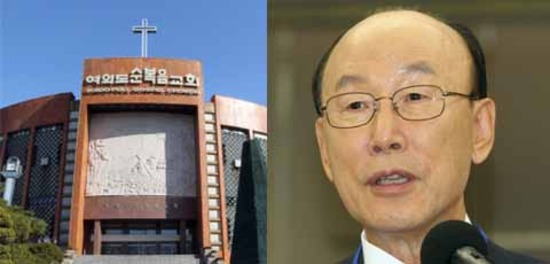
Ps David Yonggi Cho of Yoido Full Gospel Church Sentenced “Three Years In Prison, Suspended For Five Years, And … To Pay 5 billion Won”


Senior pastor David Yonggi Cho gets lighter sentence on account of his religious activities

By Kim Mi-hyang, staff reporter

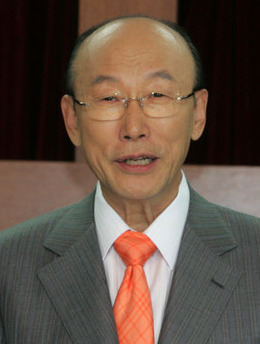
On Feb. 20, Hon. Cho Yong-hyun with the 23rd criminal division of the Seoul District Court sentenced David Yonggi Cho, 78, senior pastor of Yoido Full Gospel Church, to three years in prison, suspended for five years, and ordered him to pay 5 billion won (US$4.67 million) in fines. Cho was charged with causing around 13.1 billion won in damages to his church and evading approximately 3.5 billion won in taxes in the process (embezzlement as defined in the Act on the Aggravated Punishment of Specific Economic Crimes). In addition, Pastor Cho’s oldest son Cho Hee-jun, 49, former chairman of the Yeongsan Christian Culture Center, was given a three-year prison sentence and taken into custody.

“The criminal activity would have been impossible without the approval of Pastor Cho, who had ultimate decision-making authority,” the court ruled. “By condoning the documents that were being written while he was the head of the church, he was largely responsible for these crimes.”

The court also took into consideration the fact that Pastor Cho has contributed to social welfare over the years as a religious figure, which it explained as the reason for his lenient sentence.

The court sentenced Cho Hee-jun to actual time in prison, regarding him as the mastermind behind most of the crimes, including dereliction of duty.

Cho was indicted in 2013 on charges of professional negligence and tax evasion. At the request of his son, Cho allegedly had Yoido Full Gospel Church purchase 250,000 shares of stock in I-Service held by the Yeongsan Christian Culture Center at 86,984 won per share, even though the shares were only worth 34,386 won each, resulting in a 13.1 billion won loss for the church. When a gift tax was imposed on the church’s expensive stock purchase, Cho allegedly submitted documents to the tax authorities depicting the transaction as a normal loan, evading 3.5 billion won in taxes.


Megachurch pastors said to form new political party

The pastors are reportedly focusing on right-wing issues to sway next year’s general and presidential elections

By Cho Yeon-hyun, Religion Correspondent

A right-wing Christian party is reportedly being formed ahead of next year’s general and presidential elections with some of the country’s leading megachurch pastors, including Yoido Full Gospel Church senior pastor David Yonggi Cho and Kumnan Methodist Church pastor Kim Hong-do. The anti-Communist, pro-U.S. Citizens’ Campaign for Setting Right Church and Country, with Rev. Choe Byeong-du as chairman, plans to hold a Christian leaders’ forum from Aug. 29 to 31 at the Yangsoori Training Center in Namyangju, Gyeonggi, where it is inviting leaders from some 3,000 churches. Following around 90 lecture meetings around the country, the organization recently held three Christian leader forums at the Seoul Walkerhill Hotel.

New Puritan Spiritual Training Center Director Rev. Jeon Gwang-hun, who spearheaded the forum effort, predicted that the event would serve as a preliminary meeting for the launch of a new Protestant Christian party.

“There is a growing consensus that the church needs to address the serious situation of social collapse, since it cannot be left to politicians alone to handle,” Jeon said. “While the goal of this forum is the ten topic discussions, I expect it will ultimately lead to a debate over a Christian party.”

Jeon said that he would put himself forward if veteran figures such as Cho and Kim undertake preliminary efforts on behalf of those seeking to establish a Christian party “in order to save a country that faces crisis due to leftist North Korea puppets and anti-Christian forces.”

Cho’s associates confirmed that he would be attending the event, while Kim’s said they were unable to give a confirmation.

Jeon also said an official press conference would be held some time next week in connection with the party’s establishment.

Jeon previously established a Christian party at the time of the 2008 general elections, earning 450 thousand votes and failing to win a National Assembly proportional representation seat by a margin of around 50 thousand. At recent gatherings, he has been calling for a new Christian party with a stronger commitment to eradication of “pro-North Korea leftists” and antagonism against other religions.

According to a publicity poster that was distributed for the forum by the organization and features the faces of Cho, Kim, and Rev. Kim Sam-hwan, the event will see the gathering of pastors from 3,000 leading churches in South Korea and feature discussions on ten topics. They include “the repudiation of country by pro-North Korea leftists and Communist unification,” “the Korean sukuk law and abnormal propagation of Islam,” “human rights issues in North Korea.”

The topics also include laws regarding homosexuality, attacks on the church by Internet media, church corruption and secularization, the Korean Teachers’ and Education Workers’ Union (KTU, Jeon Gyo Jo), and distorted representations of Christianity in textbooks.

Political megachurches


By Jang Bong-kun

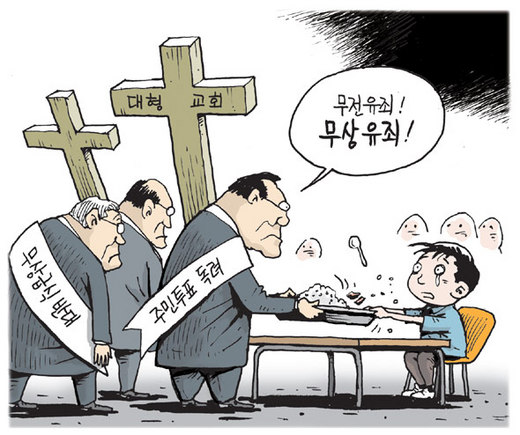
Church leaders holding large crucifixes reading “megachurch” snatch a lunch tray from a child who is eating lunch at school desk, saying, “Being poor is a sin! Free meals are sinful!”

They wear sashes reading “No free lunches” and “Soliciting voter participation.”

The Election Commission of Seoul on Friday embarked on an intensive clamp down on illegal campaigning by religious organizations calling on believers to vote in a referendum led by Seoul Mayor Oh Se-hoon to against free school lunches for elementary and middle school students. The commission, in particular, sent reportedly an official document to nine Protestant megachurches including President Lee’s Somang Church, Kumnan Church, Kwanglim Church and Yoido Full Gospel Church. Conservative megachurch leaders have denounced liberals and progressives as “Reds.”

The commission also plans to dispatch the control officers to large churches and temples.

The commission’s measures came after the Seoul Chapter of ruling Grand National Party (GNP) discussed a plan to use religious aggregations for campaign in a breakfast meeting on Thursday where GNP Chairman Hong Joon-pyo, Lee Jong-koo GNP Seoul Chapter Chairman and Mayor Oh attended.

In addition, the commission reported Choi Jin-man, chairman of Kiturami Group and Taegu Broadcasting Company, to prosecutors for giving employees of the group directives to vote in the referendum.


Yoido Full Gospel Church purges elders who blew whistle on founder


Senior members face punishment for accusations against David Yonggi Cho and will seek legal recourse

By Kim Kyu-nam, staff reporter

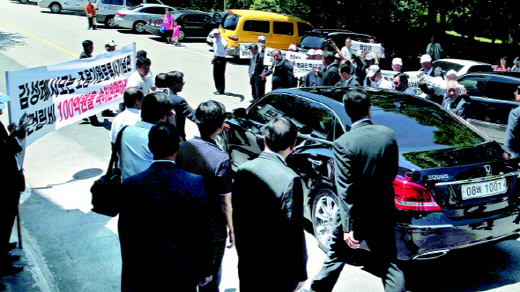
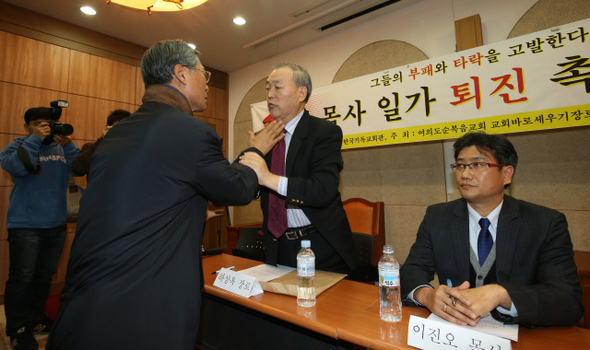
Yoido Full Gospel Church has suspended or expelled 28 elders for not withdrawing legal accusations against senior pastor David Yonggi Cho, 77.

The punishments are a form of retaliation for blowing the whistle on alleged misdeeds by Cho and his son Hee-jun, 48. This comes even as the father faces prosecution for more than US$10 million in breach of trust losses and millions of dollars in taxes evaded, while the son, a onetime Kookmin Ilbo chairman, was placed under court custody in January, which is evidence that the allegations were likely true.

Yoido Full Gospel Church has around one million members and is the biggest Pentecostal Christian congregation in the world. It was founded in 1958 by Cho and his mother Choi Ja-shil, who are both Assemblies of God pastors.

The church announced on Mar. 14 that its committee for the current term had held a meeting where it decided to expel elders Kim Dae-jin, Kim Seok-gyun, and Ha Sang-ok, who led the accusations against Cho in 2011, and suspend the other 25 who took part.

The committee was chaired by senior pastor Lee Young-hoon and made up of 46 other members including representatives of the church steering committee. It passed the disciplinary action by a vote of 36 in favor, nine against, and two abstentions. According to church bylaws, an expulsion is the second strongest disciplinary action after excommunication, stripping the person of all duties within the church for over one year. A suspension strips an individual of duties for six months or more.

After an emergency meeting on Feb. 17, the church announced that it would be taking action if the whistle blowers did not retract their accusations against David Yonggi Cho. On Feb. 28, the Assembly of God of Korea - a church affiliated with Yoido Full Gospel - and the Christian Council of Korea (chaired by Rev. Hong Jae-chul) said that anyone who did not withdraw their accusations against Cho would be dismissed according to church code.

“Obviously, the disciplinary action is wrong,” said a church elder who spoke on condition of anonymity. “The elders’ accusations were true. It is also wrong procedurally to discipline them for not following the order to withdraw their accusations when it was not an official decision by the church conference.”

One elder who was disciplined said they were planning to appeal the decision in terms of church rules and civil law.

Kim Ae-hee, secretary-general of Christian Alliance for Church Reform, said the elders felt compelled to go to prosecutors after the church did not respond when the matter was raised internally.

“What the flock wants is for the prosecutors to investigate the breach of trust charges fairly,” Kim said. “Hopefully, Rev. Cho will go along honorably with the investigation without any interference from the church.”


Yoido Church - Elders act to prevent megachurch pastor from privatizing church assets


About 30 elders of Yoido Full Gospel hold a demonstration as a car carrying Pastor David Yonggi Cho and his wife Kim Sung-hye passes by, July 20. (Photo by Ryu Woo-jong)

During Yoido Full Gospel’s leadership transfer, disputes have arisen over control of ministries, the national newspaper, and university

  
Around 30 elders at Yoido Full Gospel Church in Seoul have begun a protest aimed at Emeritus Paster David Yonggi Cho and his wife, demanding that the couple refrain from making the church their own private assets.

From around noon on July 20, the elders protested outside the Main Sanctuary at “Osanri Choi Ja-sil Memorial Fasting Prayer Mountain” in Paju, Gyeonggi Province, holding a banner demanding that Kim Sung-hye, Cho’s wife, quickly return 10 billion won ($9.5 million) in construction fees that she had taken in order to build a memorial to Cho. On the day, a religious gathering for Asian believers was being held and Kim, who is also president of Hansei University, was delivering a sermon.

At around 1 p.m., the elders held up placards with slogans such as “Don’t make the church your own private possession” and “Do you like material possessions more than heaven?” toward Cho and Kim, who were coming out of the sanctuary at the end of the gathering. In the process, scuffles broke out between the elders and church officials and Hansei University professors who blocked them.

Since April this year, the elders have been curbing attempts by Cho’s family to make the church part of their private assets through resolutions passed at the council, the church’s highest decision making body. On April 17, the council resolved to make Kim concentrate solely on Hansei University and overseas missionary activity; to make Cho and Kim’s second son and president of the daily Kukmin Ilbo newspaper, Cho Min-je, concentrate only on the Kukmin Ilbo; and to make their eldest son and former Kukmin Ilbo chairman, Cho Hoe-jun, choose only one of either Elim Welfare Town or an organization related to overseas churches.

On June 26, the council passed resolutions on five further issues, including deciding to take over the office in Yeouido’s CCMM Building that Kim had been using for free, and to make Kim return the 10 billion won she had taken from the church, saying that she would build a memorial hall for Cho.

Cho and Kim rejected these resolutions, and went a step further when Kim, who had decided not to give sermons in Korea, gave a sermon at the gathering at Prayer Mountain. This was when the elders decided to act.

The elders plan to conduct a sit-in protest at Yoido Full Gospel Church on July 24 to criticize the Cho family’s private appropriation of church assets.  


Yoido Full Gospel Church elders make explosive allegations of massive corruption


A supporter of Yoido Full Gospel Church senior pastor David Yonggi Cho reaches for the throat of former church elder Ha Sang-ok in a confrontation during a press conference by a group of 30 elders calling for Cho and his family to leave the church amid allegations of corruption, held at the Korea Ecumenical Building in Seoul’s Jongno district, Nov. 14. (by Kim Bong-gyu, staff photographer)
Senior pastor David Yonggi Cho accused of siphoning off millions in church funds; his camp denies the allegations

By Cho Yeon-hyun, religion correspondent


30 elders from Yoido Full Gospel Church, the world’s largest megachurch, held a press conference at the Korea Ecumenical Building in Seoul’s Jongno district on Nov. 14 to allege that senior pastor David Yonggi Cho and his family funneled off hundreds of billions of won from church donations.


The sheer scale of the amounts alleged by the elders to have been misappropriated is beyond the imagination. The elders made public a report from an investigation into three alleged improprieties by Cho made by a special investigation committee and ethics committee formed within the church last year. This time around, the allegations came from members of a group called the Prayer Meeting for Correcting the Church, including elders Kim Dae-jin and Kim Seok-kyun.

First, they claim that Cho returned only 64.3 billion won (US$60.2 million) of the 163.3 billion won (US$152.9 million) he borrowed from the church while building the CCMM Building between 1992 and 1998, when he was chairman of the church‘s Mission Society. The remaining 99 billion won (US$92.7 million), they say, was never returned.

By the elders’ account, construction payments of 28.5 billion won (US$26.7 million) and 16.6 billion won (US$15.5 million) were made at the time to Next Media Corporation and Facility Management Korea, companies managed by Cho’s eldest son Hee-jun.

It is also being claimed that Cho’s third son Seung-jae’s International Club Management Group bought three floors of the building from the church for 29.5 billion won (US$27.6 million) and sold them back three years later for 37.2 billion won (US$34.8 million) - pocketing the difference of 7.7 billion won (US$7.2 million).

In addition to allegedly appropriating 34.2 billion won (US$32 million) in Kukmin Ilbo newspaper lifetime reader memberships from 50,000 people for stock investments, Cho Hee-jun was also accused by the elders of making off with a total of 240 billion won (US$224.7 million) in assets related to the church.

They also claimed that David Cho’s wife Kim Sung-hae, president of Hansei University, has yet to account for 10.5 billion won (US$9.8 million) paid by the church as support for Bethesda Christian University, an institution she runs in the US. The elders also view US real estate purchased by the university for around US$15 million as having been bought with church money.

In total, the elders are accusing the Chos of embezzling as much as US$500 million or more in church money.

Associates of David Yonggi Cho insisted he had “no connection with any direct exchanges of money.”

Kim Sung-hae’s camp said the details of the Bethesda Christian University situation would be brought to light by prosecutors, who are currently investigating, but added that the elders’ claims were “merely allegations, not facts, and not worth responding to each one.”

The most explosive part of the allegations is the sheer amount of money supposedly received by David Yonggi Cho. The elders claim he received a severance payment of 20 billion won (US$18.7 million) when he stepped down as head pastor in 2008 - and that even that was decided without their knowledge or any voting by major church decision-making bodies. They also said no information was available on the whereabouts of 12 billion won (US$11.2 million) a year paid between 2004 and 2008 - 60 billion won in total - for “special missionary expenses.”

The elders gave a yearly total of 100 billion to 120 billion won (US$93.6-112.3 million) in donations received by the church. This would mean the annual amount taken in by the headquarters dropped by almost half from about 200 billion won a year when Cho spun off the Jisungjun center in downtown Seoul around the time he handed over senior pastor duties to Lee Young-hoon in 2008. Nevertheless, it remains the largest amount received in donations by any religious body in South Korea.

The elders also claim that Cho continued controlling the church even after his “retirement” by making decisions as “governor” - to the point where his successor Lee had difficulty exercising his authority on appointments and finances.

One of the former elders at the press conference, Ha Sang-ok, previously admitted to taking part in giving 1.5 billion won (US$1.4 million) while collecting the book “Madame Butterfly in Paris” from a female vocalist in France named Jeong who anonymously wrote the account about an affair with Cho.
“A sect leader might violate the commandments and do as he wishes, but a pastor cannot do that,” Ha said. “Over the past 14 years, I have met with Rev. Cho many times to try to persuade him to repent and return to being a great pastor, but the corruption has continued. That‘s why I had no choice but to disclose it to the outside world.”

The elders also made public a statement allegedly made by Cho saying he would give Jeong 1.5 billion won in exchange for her making no future mention of their extramarital relationship, along with copies of receipts for the two transactions totaling 3 billion won.
The church’s public relations office said the claims were “a personal matter that the church has no comment on.”

Lee Won-gun, an elder who functions as Cho’s “chief of staff,” said Cho is “unconcerned with money, to the point where I’ve never once seen him talk about giving money or not giving money to somebody.”

“There will be a response from this side after looking at the elders’ claims,” Lee added.
Cho is currently on trial for alleged causing 15.7 billion won (US$14.7 million) in damages to the church by instructing it to buy 250,000 shares of his eldest son’s stocks at a rate four times market value.

During the press conference, a physical altercation occurred when a number of Cho’s supporters attempted to rush the platform at the press conference and accused the elders of “insulting” the pastor.